
Dually Diesel Trucks: When the Extra Rear Tires Pay Off
A diesel dually earns its keep with heavy pin weight and stability, but width, tire cost, and daily driving tradeoffs are real.
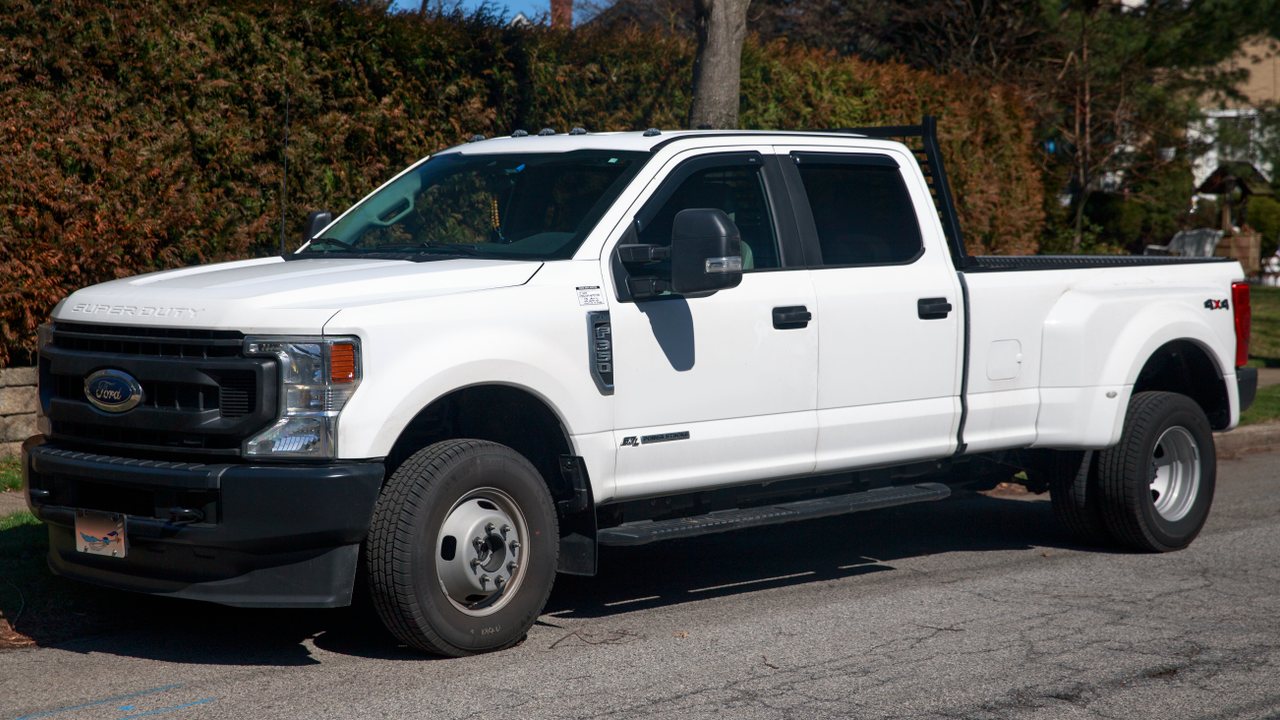
A dually diesel makes sense when rear-load capacity and stability matter more than daily-driver convenience. DRW means dual rear wheel: two tires on each side of the rear axle instead of one. That configuration can be valuable for a fifth-wheel, gooseneck, slide-in camper, service body, or other load that puts substantial weight on the rear of the truck.
Cover photo: a white 2022 Ford F-350 Super Duty XL Crew Cab 4WD with a 6.7L Power Stroke and dual rear wheels, by Mr.choppers, licensed under CC BY-SA 3.0.
Start with the exact truck and trailer
Do not choose a dually from the badge or a headline tow rating. Start with the truck’s certification label, tire-and-loading label, GVWR, front and rear GAWR, tire ratings, hitch rating, payload allowance, and the manufacturer’s towing information for that exact configuration.
Then build a realistic load plan. Include passengers, tools, bed cargo, accessories, hitch hardware, and the trailer’s loaded tongue or pin weight. A trailer can fit within an advertised tow rating while using too much payload or rear-axle capacity. Our guide to matching a diesel truck to real towing work explains how to work backward from the load.
What the extra rear tires change
Four rear tires can provide additional tire capacity and a wider rear track on a properly configured heavy-duty truck. That can make a DRW candidate appropriate when a comparable single-rear-wheel truck does not leave enough usable capacity for the real load.
The extra tires do not increase every rating by themselves. Cab, bed, drivetrain, axle ratio, suspension, wheels, tires, options, and installed equipment all affect the result. Air springs or aftermarket wheels also do not rewrite the manufacturer’s certification label.
Account for the ownership tradeoffs
A dually is wider, harder to place in some garages and parking spaces, and has two additional rear tires to inspect and replace. The rear fenders are vulnerable to damage, and an unloaded DRW may be more truck than a mixed-use buyer needs.
Measure gates, garage doors, drive-through lanes, worksite access, and trailer-storage space before buying. If a verified SRW configuration remains comfortably within every applicable limit and fits daily life better, it may be the smarter tool.
Inspect a used dually as a complete system
Inspect all six tires, including both sides of the inner rear tires. Verify size, load range, pressure, date codes, tread condition, and spacing between paired tires. Look for trapped debris, sidewall contact, uneven wear, damaged wheels, corrosion, loose or incorrect hardware, and poorly fitted aftermarket parts.
Have a qualified technician check axle seals, hubs, bearings, brakes, differential, springs, mounts, shocks, frame attachment points, hitch hardware, trailer wiring, and bedside repairs. Evidence of hard towing is not automatically a deal breaker, but the maintenance records and price should match the work.
Dually buyer checklist
- Photograph every certification and tire-loading label.
- Verify VIN-specific towing information and hitch ratings.
- Calculate passengers, cargo, accessories, hitch, and pin or tongue load.
- Compare actual axle weights with front and rear GAWR.
- Inspect both sides of every inner and outer rear tire.
- Check wheels, hubs, brakes, suspension, axle seals, and frame mounts.
- Measure width constraints before bringing the truck home.
- Compare broader one-ton pickup inventory, but confirm DRW on every listing.
The right dually makes the real towing or payload math work with useful margin. The wrong one is purchased for appearance, used hard, and sold without records. Let the labels, scale weights, inspection, and job decide whether the extra rear tires pay off.
Evidence
Sources
Primary references used to verify the regulatory and technical details in this article.
- 1. 2026 Ford RV and Trailer Towing GuideFord Motor Company
- 2. 2026 Silverado 3500 HD Trailering ChartChevrolet / General Motors
Inventory
Shop trucks from this story
Next steps