
How to Match a Diesel Truck to Real Towing Work
A practical guide to matching diesel truck payload, hitch setup, drivetrain, and cooling capacity to the trailer you actually tow.
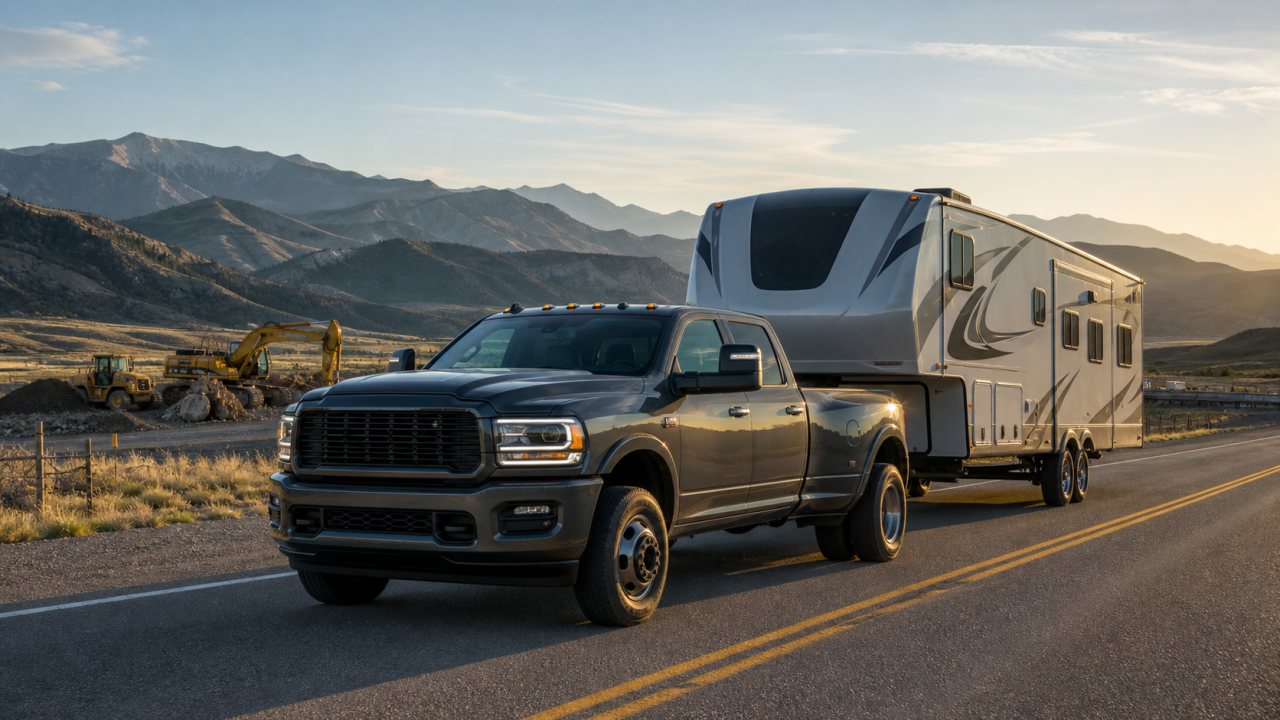
A diesel truck that looks strong on paper can still be the wrong truck for your trailer. The cleanest way to shop is to start with the load, then work backward into the truck.
Look at the trailer's loaded weight, tongue weight or pin weight, and the route it will normally run. A short local equipment haul is different from a fifth-wheel that crosses grades in summer heat. Once the trailer is clear, compare the truck's door-jamb payload sticker, rear axle rating, GVWR, GCWR, tire ratings, hitch equipment, brake controller, cooling package, and service history.
For fifth-wheel and gooseneck towing, payload usually becomes the deciding number before advertised tow rating. A single rear wheel truck can be easier to live with, but a dually can add rear-tire capacity and stability when pin weight is high. For bumper-pull work, receiver rating, trailer brake condition, wheelbase, and rear suspension condition matter more than the badge on the grille.
Used diesel buyers should also inspect how the truck was used before. Hitch rails, bed holes, trailer wiring repairs, worn receiver parts, hot brakes, uneven tires, and transmission service gaps can all point to heavy towing history. Heavy use is not a deal breaker when records are strong. Heavy use with no records should change the price.
Before contacting a seller, compare active towing-ready diesel listings, then shortlist trucks where the payload and hitch setup match your actual trailer instead of the largest number in the brochure.
Inventory
Shop trucks from this story
Next steps