
4x4 vs 4x2 Diesel Trucks: Which One Should You Buy?
Choose 4x4 or 4x2 by matching traction, road conditions, payload, towing configuration, maintenance, and resale needs to the truck’s real job.
Four-wheel drive is easy to want and easy to overvalue. For some diesel-truck buyers it is essential job equipment; for others it adds parts, weight, and purchase cost without solving a regular problem. A 4x2 can be the better work or towing truck when it stays on maintained roads, while a 4x4 can be worth the tradeoff for mud, snow, steep access roads, fields, and remote jobsites.
Choose from the truck’s real duty cycle, not from resale folklore or a badge on the bed.
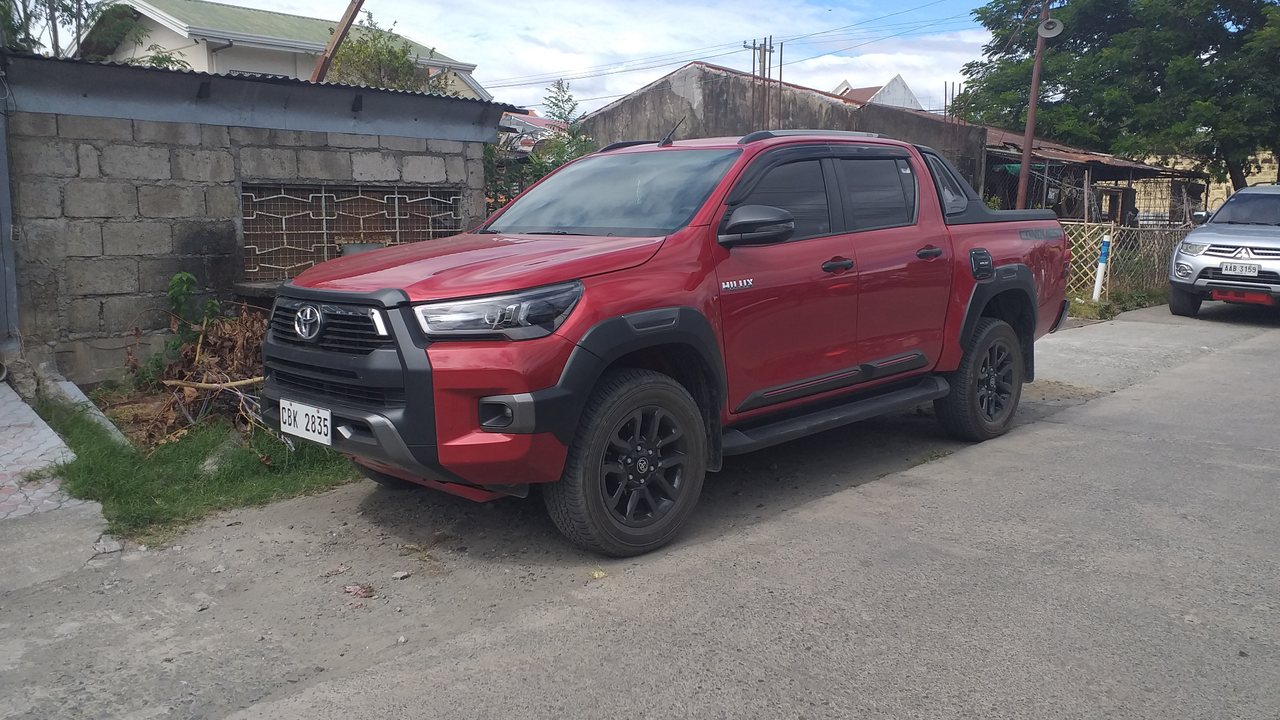
Cover photo: a 2020 Toyota Hilux V Conquest diesel 4x4, used here to show a clearly identified four-wheel-drive configuration, by Captainmorlypogi1959, licensed under CC BY-SA 4.0.
Start with where the truck must go
Write down the worst conditions the truck will face in a normal year:
- unplowed snow or icy grades;
- muddy fields, ranch roads, and construction access;
- loose gravel, sand, boat ramps, or wet grass;
- steep driveways with a trailer;
- paved highway and city delivery routes;
- long-distance RV or equipment towing;
- emergency travel where waiting for better conditions is not practical.
Occasional bad weather does not automatically require 4x4, and owning 4x4 does not guarantee safe travel. Tire type, tread condition, load distribution, ground clearance, traction aids, speed, and driver judgment all matter. Four-wheel drive can help a truck move; it does not create extra braking grip beyond what the tires and road allow.
Use the 4x4 diesel inventory hub and 4x2 truck inventory hub to compare actual candidates instead of assuming one layout always costs less.
Where a 4x2 can make more sense
A 4x2 truck eliminates the transfer case and driven front axle hardware used by a comparable 4x4. Depending on the exact configuration, that can mean a lower curb weight, fewer driveline components to maintain, and potentially more available payload. It may also sit lower, which can make bed access and trailer coupling easier.
Those advantages must be verified on the individual truck. Trim, cab, bed, wheels, tires, axle ratio, optional equipment, and aftermarket parts can erase a simple paper comparison. Read the certification and tire-loading labels rather than transferring a rating from another listing.
A highway tow rig, local delivery truck, or service vehicle that operates almost entirely on pavement may not benefit enough from four-wheel drive to justify the additional hardware. Good tires and a suitable limited-slip or locking differential can improve a 4x2’s usefulness, but neither turns it into a 4x4.

A matching 2020 Toyota Hilux V Conquest diesel in 4x2 configuration. Photo by Captainmorlypogi1959, licensed under CC BY-SA 4.0.
Where a 4x4 earns its place
Four-wheel drive can provide useful traction when the rear tires alone cannot move the truck reliably. Low range, where equipped, can also improve controlled low-speed operation in appropriate conditions. This can matter for farms, snow work, construction, remote towing, and trailers that must be positioned on loose or uneven surfaces.
It is not permission to ignore weight, tires, recovery planning, or road conditions. A heavy diesel truck can sink quickly on soft ground, and a trailer can push the combination even when the truck has traction. If access conditions are central to the job, discuss tires, recovery points, and trailer maneuvering with an experienced operator before buying.
Do not confuse drivetrain with tow rating
A 4x4 badge does not automatically increase payload or trailer capacity. In some otherwise similar configurations, the additional equipment can reduce available payload because the truck itself weighs more. Only the documentation for the exact VIN, axle ratio, cab, bed, drivetrain, and installed hitch can answer the question.
Our guide to matching a diesel truck to real towing work explains how passengers, cargo, hitch hardware, and tongue or pin load consume the truck’s available capacity.
Inspect a used 4x4 as a complete system
Test the system according to the owner’s manual and only on an appropriate surface. Verify indicator behavior, engagement, low range where equipped, and return to normal drive mode. Listen for binding, clicking, grinding, or clunks, but do not diagnose a sound without a proper inspection.
Have a technician inspect:
- transfer case fluid, leaks, mounts, controls, and wiring;
- front differential, axle seals, hubs, CV joints or universal joints;
- front driveshaft and all universal joints;
- mismatched tire sizes or major tread-depth differences;
- suspension lifts, steering geometry, and altered driveline angles;
- evidence of impact, deep mud, water intrusion, or poor recovery-point use.
For a 4x2, inspect the rear differential, driveshaft, traction-control warnings, tires, and any locking or limited-slip hardware just as carefully. Simplicity does not excuse neglected maintenance.
4x4 vs 4x2 buyer checklist
- Define the worst regular surface and weather conditions.
- Compare payload labels on actual candidates.
- Verify tow data for the exact VIN and configuration.
- Price tires and all drivetrain maintenance.
- Test 4x4 modes safely and inspect the complete system.
- Document lifts, tire changes, tuning, and axle-ratio changes.
- Check for off-road impact and water or mud exposure.
- Confirm that the truck fits daily parking and loading needs.
Buy 4x4 when its traction and low-speed capability solve a repeatable problem. Buy 4x2 when pavement use, payload efficiency, simpler maintenance, and easier access matter more. The correct answer is the truck that safely performs the job you actually have—not the one with the longest option list.
Evidence
Sources
Primary references used to verify the regulatory and technical details in this article.
- 1. 2015 Ford F-Series Super Duty Owner's ManualFord Motor Company
- 2. 2006 Chevrolet Silverado Owner ManualChevrolet / General Motors
Inventory
Shop trucks from this story
Next steps