
High Idle Hours on Diesel Trucks: What Engine Hours Mean
Engine hours can reveal work history that mileage misses. Learn how to compare idle hours, service records, scan data, and real truck condition.
Mileage tells only part of a diesel truck’s working life. A truck can accumulate relatively few road miles while spending long periods idling at a jobsite, powering accessories, waiting in traffic, warming in severe weather, or operating with a power take-off. Engine hours add valuable context—but they are not a universal pass-or-fail number.
The right question is not “How many hours are too many?” It is “What kind of work produced those hours, and does the truck’s condition and maintenance support that history?”
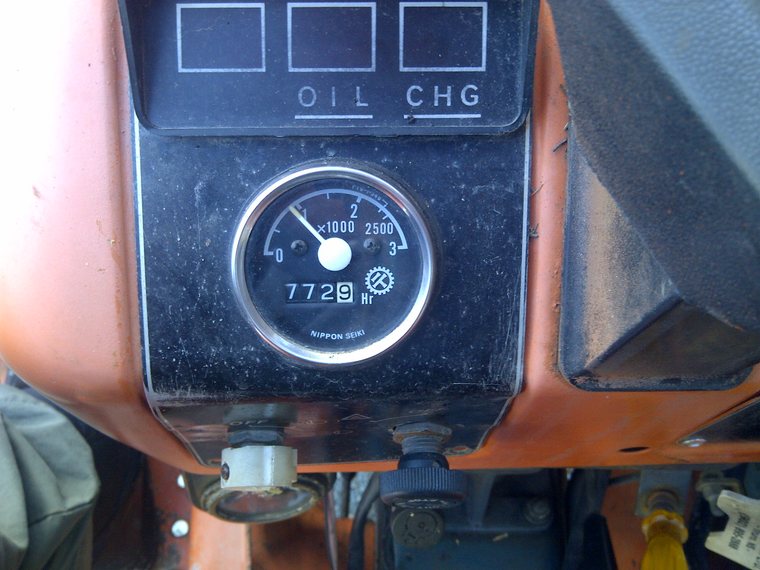
Illustrative diesel-equipment hour meter and tachometer on a Kubota tractor, not a pickup truck. Photo by NSEasternShoreChemist, licensed under CC BY-SA 4.0.
Start with miles, hours, and the truck’s job
Record total mileage, total engine hours, idle hours if the truck reports them separately, and the date of the reading. Dividing miles by total engine hours can produce a rough lifetime average speed, but do not treat that result as a diagnostic threshold. Highway trucks, urban service vehicles, snowplows, utility trucks, tow rigs, and personal pickups naturally produce different patterns.
Ask the seller what the truck did every day. Useful answers include route type, trailer use, seasonal work, jobsite idle time, PTO operation, fleet assignment, and whether drivers could take the truck home. Compare the explanation with bed wear, hitch marks, cab condition, tire pattern, service stickers, and business decals.
If the displayed hours seem inconsistent with the mileage or history, ask whether the instrument cluster, engine controller, or engine has been replaced. Replacement parts are not automatically a problem, but the seller should be able to document the change.
Why idle history changes the inspection
An idling engine is still running its oiling, cooling, charging, fuel, and emissions systems even though the odometer barely moves. Accessories may also be working: air conditioning, lights, inverters, hydraulic equipment, or PTO-driven systems. That means a mileage-only service history may not fully describe the truck’s use.
On emissions-equipped trucks, operating pattern matters as much as the raw hour count. Repeated low-load use can affect how the aftertreatment system operates, but condition cannot be inferred from hours alone. Scan data, warning history, complete hardware, and a road test are more useful than guessing.
Our 7.3L Power Stroke maintenance guide also explains why severe-duty use should shape the maintenance baseline rather than relying on one generic interval.
Ask for hour-aware maintenance records
Look for oil and filter service, fuel-filter service, coolant work, belt and hose replacement, transmission and driveline service, battery and charging repairs, and emissions-system maintenance where applicable. Fleet records may show both mileage and hours; personal-owner receipts may show only mileage.
Do not reject a truck simply because older records lack hour readings. Instead, assess whether service frequency, oil analysis if available, inspection results, and current condition make sense for the reported work. Fresh fluids without older records do not establish a long maintenance history.
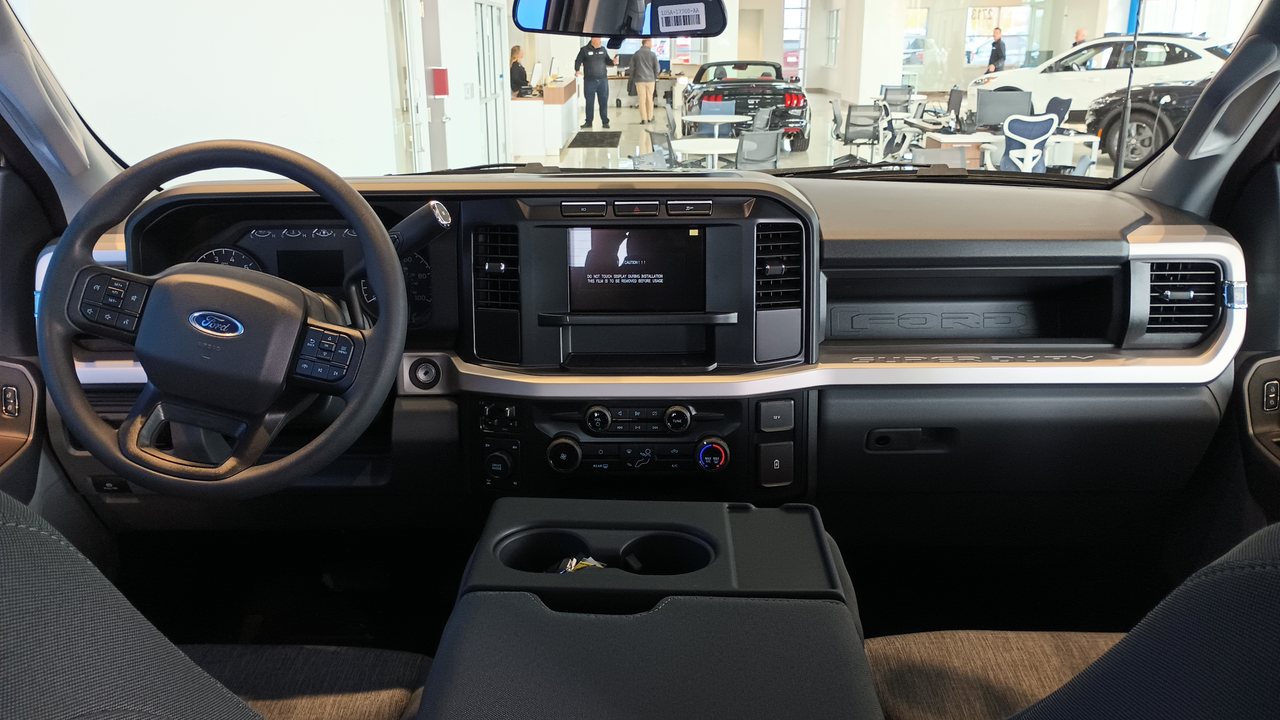
Cover photo: dashboard of a 2023 Ford F-250 Super Duty XL STX SuperCrew, by deathpallie325, licensed under CC BY-SA 4.0.
Inspect the truck cold, hot, and under load
Request a genuine cold start. Observe starting behavior, idle quality, warning lights, smoke, fluid pressure warnings, charging voltage, and unusual noise. Then inspect for leaks and verify that accessories operate correctly.
During the road test, let the truck reach normal operating temperature. Check throttle response, shifting, steering, braking, cooling behavior, and the transition between idle and load. A qualified technician should scan all modules for stored, pending, and recently cleared faults, review available hour data, and compare commanded and actual values where relevant.
After the drive, inspect again for leaks, odors, warning messages, fluid movement, or abnormal heat. If the truck has a PTO, auxiliary idle control, inverter, hydraulic system, or extensive lighting, test that equipment safely and inspect the installation.
Look beyond the engine
High idle use often points to a work history, so inspect the complete chassis and cab:
- driver-seat, pedal, steering-wheel, and switch wear;
- door hinges, steps, bed, tailgate, and tool mounting points;
- batteries, alternator, grounds, and added electrical wiring;
- cooling stack, fan operation, hoses, and evidence of leaks;
- transmission, transfer case, axles, universal joints, and brakes;
- suspension, steering, tires, hitch, and trailer wiring;
- DPF, SCR, EGR, sensors, and warning history where equipped.
Compare the findings with similar listings in the diesel truck inventory, not just with a seller’s mileage-based asking price.
High-idle buyer checklist
- Photograph the mileage and every available hour reading.
- Ask what work created the idle time and whether PTO was used.
- Confirm cluster, ECM, and engine replacement history.
- Review service records for both time and usage.
- Perform cold-start, full-temperature, and post-drive inspections.
- Scan every available module with a qualified technician.
- Test auxiliary equipment and inspect added wiring.
- Price unresolved emissions, cooling, charging, or driveline issues.
High hours are not automatically bad, just as low mileage is not automatically good. A well-maintained work truck with an understandable duty cycle can be a better purchase than a low-mileage truck with missing records and unexplained wear. Use hours to ask better questions, then let documentation, scan data, and physical condition decide whether the truck belongs on your shortlist. The same principle is central to our high-mileage Cummins buyer guide.
Evidence
Sources
Primary references used to verify the regulatory and technical details in this article.
- 1. 2015 Ford F-Series Super Duty Owner's ManualFord Motor Company
- 2. 2014 Ford Diesel SupplementFord Motor Company
Inventory
Shop trucks from this story


Next steps