
7.3L Power Stroke Maintenance Guide and First-90-Days Plan
Build a documented 7.3L Power Stroke service baseline for engine oil, fuel and water separation, air intake, coolant, batteries, transmission, towing, and severe-duty use.
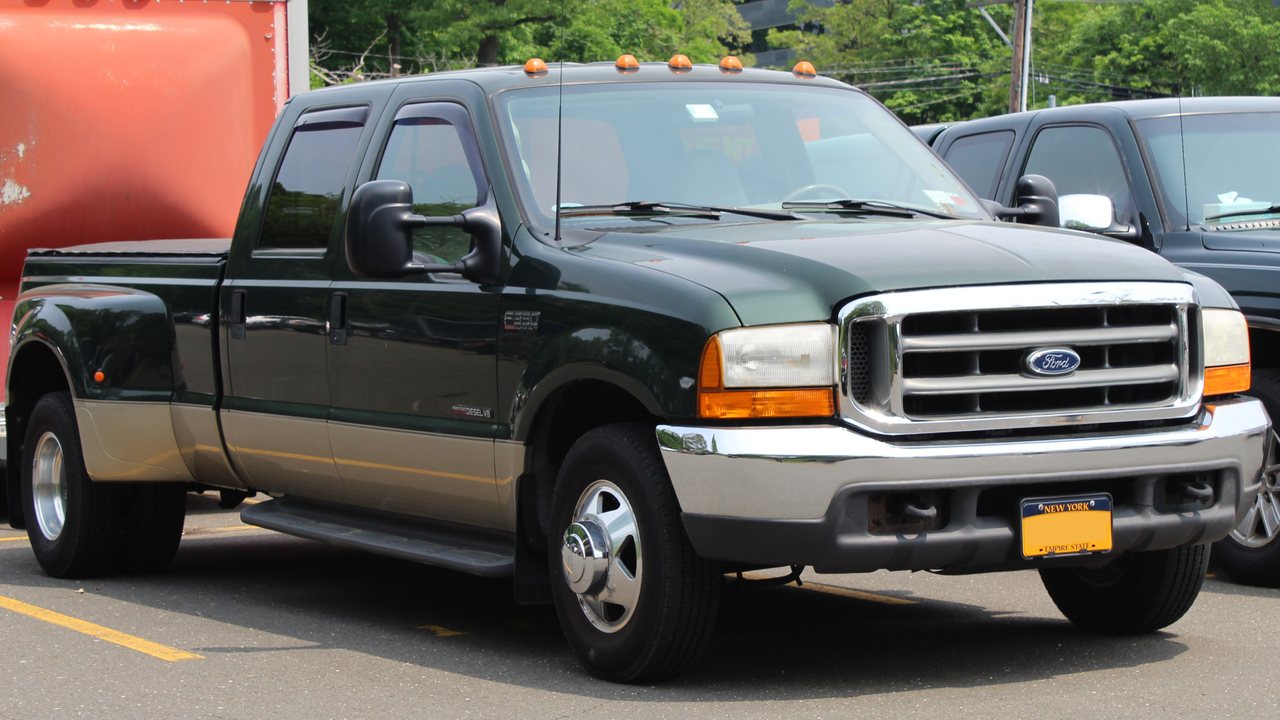
The best 7.3L Power Stroke maintenance plan starts with the exact truck, not a universal internet chart. Ford’s application information includes multiple chassis, model-year and engine-serial-number breaks from 1994–2003, while older maintenance guides show that normal and severe-duty schedules can differ. The installed transmission, coolant chemistry, modifications, climate, towing, idling, and earlier repairs also change the work required today.
Use this guide to establish a documented baseline. Verify every fluid specification, part number, capacity, and interval against the owner guide, diesel supplement, maintenance guide, and service information for the exact VIN and build. A qualified shop should resolve unknown fluids or active symptoms before you mix products or extend an interval.
Quick maintenance baseline
| System | Working baseline | Important qualification |
|---|---|---|
| Engine oil and filter | Follow the exact normal or special-operating schedule; Ford’s 2002 supplement lists 5,000 miles normal and 3,000 miles/3 months for defined special use | Use the correct current specification and temperature-appropriate viscosity |
| Oil level | Check regularly; Ford’s guide recommends checking at each fuel stop | Use the guide’s consistent hot-check procedure on level ground |
| Fuel filter | Ford’s current legacy reference lists 15,000 miles | Older model-year schedules can differ; exact VIN guide controls |
| Water separator | Drain on schedule and whenever WATER IN FUEL appears | Current Ford legacy material says monthly or sooner; the 2002 supplement also gives a mileage reminder |
| Air cleaner | Inspect restriction indicator and intake system | Replace by restriction/condition, not appearance alone |
| Coolant | Check level and condition cold; identify chemistry and service history | Do not mix unknown coolants or blindly add an obsolete additive |
| Batteries and starting | Test both batteries, cables, grounds, starter, and charging as a system | Slow cranking affects cold-start diagnosis |
| Transmission and driveline | Identify the exact transmission and duty schedule | There is no single E4OD/4R100/manual interval |
Why engine oil is especially important on a 7.3
The 7.3L Power Stroke uses engine-oil pressure to actuate its unit injectors. Ford states that viscosity is important to the oil pressure required for injection and that extended oil-change intervals can reduce performance and fuel economy. Oil maintenance therefore affects more than bearing lubrication; it is part of how the engine starts and runs.
The 2002 diesel supplement lists:
- oil and filter every 5,000 miles under its normal schedule;
- every 3,000 miles or three months under its defined special operating conditions;
- a 15-quart capacity including the filter for the listed applications.
Do not copy those numbers to every truck without checking its own documents. Earlier schedules and chassis applications can differ, and time, hours, contamination, analysis, modifications, or severe operation can justify a shorter interval.
Ford’s special-use examples include towing, extended idling or low-speed operation, dusty or off-road conditions, heavy operation in high temperatures, and frequent short trips in freezing weather. If the truck is a tow rig, work truck, plow truck, farm truck, or long-idle service vehicle, read the severe-duty section before choosing the interval.
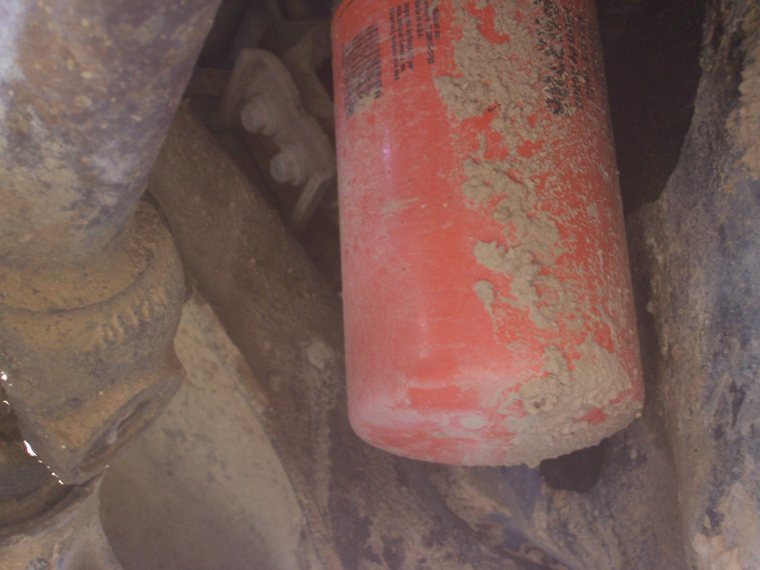
Photo: Jeremiah Bell, CC BY-SA 3.0, via Wikimedia Commons. The source identifies a Ford F-250 7.3L diesel but does not establish Power Stroke versus IDI, so the image illustrates only an under-engine oil-filter area.
Use a current oil specification, not an obsolete label
An original manual may list API oil categories that were current when the truck was new. Do not tell a parts counter to find an obsolete category without checking Ford’s current guidance.
Motorcraft’s current SAE 15W-40 Super Duty diesel oil is listed as meeting Ford WSS-M2C171-F1 and API CK-4, and Motorcraft identifies it for 7.3L Power Stroke use above 20°F. For colder temperatures or another viscosity, use the current Ford recommendation for the exact conditions and engine. Note that 20°F is approximately −7°C; use the Fahrenheit threshold from the source rather than repeating an incorrect conversion.
Record brand, product name, viscosity, specification, quantity, filter part number, mileage, date, and operating hours if available. A receipt that says only “diesel oil” is not a complete maintenance record.
Check oil level consistently
Ford recommends checking the oil level at each fuel stop. Its 2002 procedure calls for a normal-temperature engine, level ground, shutdown, and at least a 20-minute wait so oil can return to the pan before reading both sides of the dipstick.
Consistency matters. An immediate reading and a 20-minute reading can differ. Record unexplained consumption, an increasing level, repeated overfill, leaks, or signs of fuel or coolant contamination and have them diagnosed. Do not add oil above the operating range.
Fuel filter and water-separator service
Clean, water-free fuel is central to injector life. Ford’s guide describes a combined filter/water separator and warns that water left in the system can cause extensive injection-system damage.
Ford’s current legacy maintenance reference lists a 15,000-mile fuel-filter interval for the 7.3L, while older schedules can show different normal and severe values. Use the exact model-year material and shorten the plan when fuel quality, contamination, or the restriction indicator requires it.
For the water separator, a practical conservative reminder is:
- inspect or drain at least monthly according to current Ford legacy guidance;
- service sooner whenever the WATER IN FUEL warning appears;
- follow the exact diesel supplement procedure with the engine off;
- use a safe approved container and dispose of the mixture properly;
- investigate repeated water rather than only resetting the warning.
Never drain the separator with the engine running. Ford warns that fuel can ignite if the procedure is performed while the engine is running or the vehicle is moving.
After a filter change, trapped air can cause temporary rough running and smoke while the system purges. Persistent symptoms deserve inspection for a leak, restriction, incorrect installation, contamination, or another fault.
Service the intake by restriction and condition
The factory restriction gauge shows when the air cleaner has reached its service point. Inspect the gauge, housing, element seal, ducts, clamps, and charge-air plumbing. Reset the indicator only after correcting the restriction.
Do not replace an element only because the visible side looks dusty, and do not keep one merely because it looks clean. A damaged seal, dirt track, disconnected gauge, cracked duct, collapsed hose, or loose charge-air boot can matter more than color.
Dusty or off-road use belongs on the severe-duty plan. Record restriction readings and inspection dates so a later owner or technician can see whether the truck’s environment was considered.
Coolant: identify chemistry before adding anything
Ford’s original guides discuss coolant level, concentration, change intervals, and a supplemental coolant additive used with the original chemistry. A surviving truck may still use that system, may have been converted correctly, or may contain an unknown mixture.
Before adding coolant or additive:
- Inspect only when the system is cool and safe.
- Ask for the last coolant-service invoice and product.
- Identify the existing chemistry with appropriate records and testing.
- Check the reservoir, cap, hoses, radiator, water-pump area, heater, and visible residue.
- Follow a qualified conversion procedure if changing chemistry.
Do not mix products because their color appears similar. Do not add the historical FW-15 dose blindly to a truck that may have a different coolant. Document the final product, concentration, test method, capacity, and date.
Batteries, glow-plug operation, and cranking speed
Maintain the two-battery starting system as one system. Test both batteries, clean and torque connections correctly, inspect cables and grounds, verify charging output, and evaluate starter draw and cranking speed when starting degrades.
The WAIT TO START light and glow-plug operation are part of the cold-start sequence. A maintenance visit should preserve a cold-start complaint rather than warming the engine before diagnosis. Do not use ether or starting fluid; Ford warns of explosive damage and injury.
Electrical maintenance is also preventive diagnosis. Weak voltage and slow cranking can imitate or amplify fuel, oil-pressure, or injector complaints.
Transmission, axle, transfer case, and chassis
A 7.3L truck may have an E4OD, 4R100, or a manual transmission depending on year and application. Chassis, axle, transfer-case, hub, steering, brake, and suspension service also varies.
Identify every unit from the VIN, certification label, build information, and installed tags. Then build the schedule from the exact manual and duty cycle. Record fluid specification, quantity, filter, pan condition, debris findings, and any adjustment. “Transmission serviced” without the fluid or procedure is not enough.
Towing increases the importance of cooling, fluid condition, brakes, tires, hitch hardware, axle loads, and temperature monitoring. Never use a maintenance article to infer a tow rating; use the truck’s exact ratings and configuration.
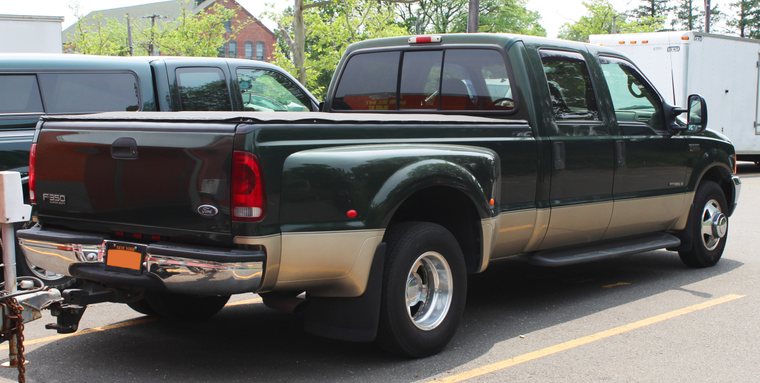
Photo: Kevauto, CC BY-SA 4.0, via Wikimedia Commons.
First 30 days after buying a used 7.3
Do not replace every fluid blindly on day one. First document what is installed and preserve evidence that may explain a symptom.
During the first month:
- save a cold-start video and baseline scan;
- verify VIN, engine application, build information, and recall status;
- collect earlier invoices and contact the servicing shop when appropriate;
- inspect oil, fuel, coolant, intake, charging, leaks, and chassis;
- identify all fluid types and aftermarket parts;
- correct safety defects, active leaks, contaminated fluids, and warning lights;
- create a service log with mileage, date, hours, parts, specifications, and receipts.
If an oil analysis, coolant test, compression test, or fuel-pressure diagnosis is justified, perform it before discarding the evidence through a wholesale fluid change.
Days 31–60: establish the baseline
After inspection and diagnosis:
- change oil and filter if history or remaining interval is uncertain;
- replace the fuel filter using the correct part and procedure when due or unknown;
- drain and inspect the water separator safely;
- service the air cleaner only when restriction or condition requires it;
- correct coolant chemistry and concentration through a documented plan;
- service the installed transmission and driveline according to their actual schedule;
- test batteries, charging, starter, and glow-plug operation;
- repair safety, brake, steering, tire, and corrosion items.
Save old-part photos and the technician’s findings. A clean log makes future symptom diagnosis faster and increases buyer confidence when the truck is eventually sold.
Days 61–90: verify under the real duty cycle
Use the truck gradually in the work it will perform. Monitor starting, leaks, oil consumption, coolant level, charging, shift quality, temperatures, smoke, and fuel/water warnings.
Reinspect after towing or sustained highway use. Look for a leak that appears only hot, a loose charge-air connection, fluid movement, tire or brake heat, and hitch or suspension issues. Adjust the maintenance calendar to the real severe-duty triggers instead of keeping a normal-use schedule by habit.

Photo: Brian Snelson, CC BY 2.0, via Wikimedia Commons. This E-350 expedition vehicle illustrates why chassis and duty history matter beyond pickups.
Maintenance log template
| Date | Mileage/hours | System | Product and specification | Part number | Quantity | Findings and next due |
|---|---|---|---|---|---|---|
| YYYY-MM-DD | 000,000 / 0,000 h | Engine oil/filter | Brand, viscosity, Ford/API specification | Filter number | Quarts | Leak/analysis notes; due by mileage, time, or duty |
| YYYY-MM-DD | 000,000 / 0,000 h | Fuel filter/separator | Filter brand and fuel finding | Filter number | — | Water/debris noted; next inspection |
| YYYY-MM-DD | 000,000 / 0,000 h | Coolant | Product, chemistry, concentration | — | Quarts | Test result and next service |
Frequently asked questions
How often should I change oil in a 7.3 Power Stroke?
Use the exact schedule for the truck and duty cycle. The 2002 Ford supplement lists 5,000 miles for normal use and 3,000 miles or three months for defined special operating conditions. Other model-year or chassis material can differ.
What oil does a 7.3 Power Stroke use today?
Use a current oil meeting Ford’s applicable specification and the correct viscosity for temperature and operation. Motorcraft currently lists its SAE 15W-40 WSS-M2C171-F1/API CK-4 product for 7.3L use above 20°F. Verify current Ford guidance before service.
How often should the water separator be drained?
Follow the exact diesel supplement. Current Ford legacy guidance says monthly or sooner when WATER IN FUEL appears, while the 2002 supplement also provides a mileage reminder. Repeated water requires diagnosis.
Does a 7.3 Power Stroke use DEF?
No. Ford’s 7.3L maintenance reference does not apply DEF service to this engine. Do not confuse the historical 7.3L diesel with modern emissions systems or with Ford’s current 7.3L gasoline engine.
Can I use one transmission interval for every 7.3 truck?
No. Transmission type, model year, chassis, fluid specification, towing, temperature, and severe duty differ. Identify the installed unit and use its exact schedule.
Related 7.3 guides
Use the 7.3 Power Stroke buyer’s guide when inspecting a truck for sale. Use the 7.3 Power Stroke symptoms and reliability guide when a starting, leak, fuel, or turbo symptom needs structured diagnosis.
Photo credit
Cover photo: “2000 Ford F-350 Super Duty Crew Cab 7.3L Powerstroke Diesel V8 with trailer attached” by Kevauto, CC BY-SA 4.0, via Wikimedia Commons.
Evidence
Sources
Primary references used to verify the regulatory and technical details in this article.
- 1. 2002 7.3L Power Stroke Diesel Owner’s Guide SupplementFord Motor Company
- 2. 7.3L Power Stroke Maintenance IntervalsFord Motor Company
- 3. SAE 15W-40 Super Duty Diesel Motor OilMotorcraft
- 4. 1998 Ford Maintenance GuideFord Motor Company
- 5. 7.3L Ford Remanufactured Diesel Engine Application ChartFord Motor Company
- 6. Check for RecallsNational Highway Traffic Safety Administration
Inventory
Shop trucks from this story


Next steps