
What to Look for When Buying a 7.3L Power Stroke Truck
Use this pre-purchase checklist to verify a used 7.3L Power Stroke truck through a cold start, records, scan data, leak inspection, road test, VIN checks, and an independent diesel inspection.
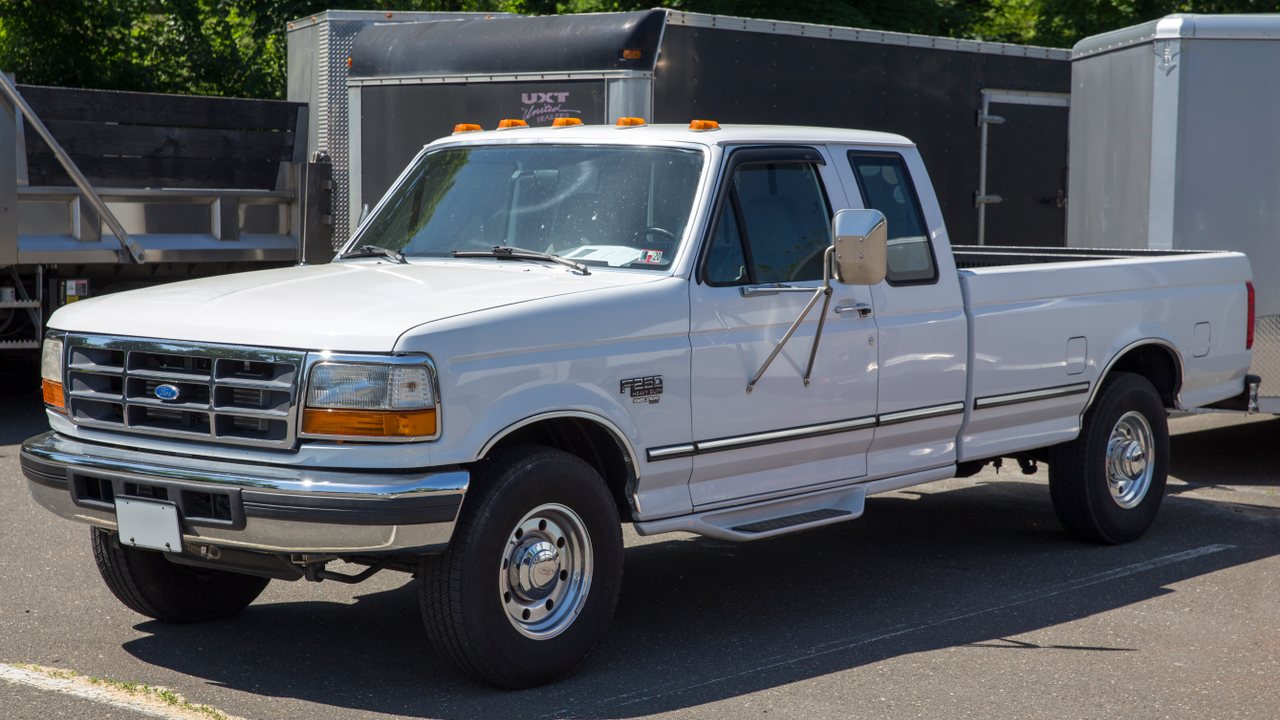
A 7.3L Power Stroke badge is not a substitute for an inspection. Ford’s own application chart spans model years 1994–2003 and multiple chassis, with production breaks inside that range. Today, every candidate is more than two decades old. Maintenance, corrosion, modifications, towing history, transmission condition, and the quality of earlier repairs can matter as much as the engine family.
This guide covers the 7.3L direct-injection Power Stroke, not the earlier 7.3L IDI diesel and not Ford’s current 7.3L gasoline V8. Use it to organize a seller interview and a professional pre-purchase inspection. It is not a remote diagnosis and does not replace the factory information for the exact VIN, model year, chassis, transmission, and emissions configuration.
Quick 7.3 Power Stroke buying checklist
Before making an offer, complete all 15 checks:
- Decode the VIN and confirm the installed engine and model year.
- Ask for service records before visiting.
- Require a genuinely cold start.
- Watch the WAIT TO START light and cranking behavior.
- Scan the powertrain before codes can be cleared.
- Check oil level, condition, and service history.
- Inspect the engine valley and trace every active leak.
- Inspect the fuel bowl, filter history, and water-separator history.
- Check coolant level, condition, and documented chemistry.
- Inspect intake plumbing, the air-restriction gauge, and turbo operation.
- Road-test the engine and transmission at full operating temperature.
- Inspect the frame, steering, suspension, brakes, tires, and driveline.
- Document tunes, gauges, intake, exhaust, and towing modifications.
- Check recall 07S57 by VIN and ask for completion evidence.
- Make the sale conditional on an independent diesel inspection.
1. Confirm that it is the truck the seller describes
Start with the physical VIN at the windshield and certification label, then compare it with the title and seller’s records. Use the NHTSA VIN Decoder as a comparison tool, not as authentication of the physical VIN or ownership documents.
Ford’s 7.3L application chart shows why “it is a 2003” is not enough. Applications and engine serial-number breaks differ, and the 2003 model year can require extra care because Ford also used the 6.0L Power Stroke in that period. Confirm the engine from the VIN, underhood emissions label, build information, records, and installed hardware. For replacement parts, use the engine serial number and the correct catalog break instead of ordering by year alone.
Also identify the truck around the engine: F-250 or F-350, two- or four-wheel drive, axle ratio, transmission, cab and bed, GVWR, and factory or later upfit. A healthy engine inside a rusted, overloaded, or poorly modified truck is still a poor purchase.
2. Ask for records before you make the trip
Request dated invoices or a maintenance log for:
- engine oil and filter changes;
- fuel-filter and water-separator service;
- coolant tests, changes, additives, or coolant conversion;
- transmission, transfer-case, axle, and clutch service;
- batteries, starter, charging, glow-plug, and electrical work;
- injectors, high-pressure oil system, turbocharger, and fuel-system repairs;
- towing equipment, brake work, tires, steering, and suspension;
- recall work and major modifications.
Records do not have to be dealer-only, but they should form a consistent timeline. Match dates, mileage, VIN, part numbers, and shop information. A stack of receipts is more useful than a seller saying “the previous owner did everything.”
Do not reject a truck only because one repair appears in its history. A documented repair using the correct procedure may be better evidence than an untouched-looking truck with no history. The problem is uncertainty: repeated symptoms, mismatched mileage, missing invoices, or major work with no parts or shop detail.
3. Require a genuinely cold start
Tell the seller in advance not to start or plug in the truck before the appointment unless weather and safety require it. When you arrive, verify that the engine has not already been warmed. Do not touch hot or moving components.
Turn the key on and observe the warning-light check. Ford’s diesel supplement says the WAIT TO START light should illuminate at least briefly when the engine is cold; if heat is required, wait for the light to go out before cranking. The same guide warns against using ether or other starting fluid in the intake because it can cause explosive engine damage and injury.
Watch and record:
- cranking speed and duration;
- whether both batteries appear to contribute normally;
- WAIT TO START and other warning lights;
- how quickly the engine settles into an even idle;
- unusual mechanical noise;
- smoke that continues after the initial start;
- oil-pressure indication and charging voltage;
- fresh oil, fuel, or coolant leaks.
Cold-start difficulty can involve the glow-plug system, cranking speed, electrical supply, fuel delivery, high-pressure oil operation, oil grade or level, or other causes. Smoke color or a slow start does not prove that the injectors are bad. Preserve the symptom for a qualified technician instead of letting the seller warm the truck until it disappears.
4. Scan it before and after the road test
Use a scan tool and software that can communicate properly with the truck’s Ford powertrain systems. A basic generic code reader may not provide the data or functional tests a diesel specialist needs.
Record active, pending, and stored faults before the road test. Ask the technician to review relevant live data and perform appropriate contribution, injector electrical, or other factory-guided tests when symptoms justify them. If a compression test is needed, it should follow the correct workshop procedure; do not use a universal internet threshold.
Be cautious when monitors or memory appear recently cleared, the batteries were just disconnected without a documented reason, or the seller refuses a scan. A clean dashboard is not evidence that the modules contain no useful history.
5. Treat oil as part of the injection-system inspection
The 7.3L Power Stroke uses engine-oil pressure to actuate its unit injectors. Ford’s supplement states that oil viscosity and recommended service intervals matter because the injection system depends on that pressure. This is why oil level, oil history, start behavior, and high-pressure oil leaks belong in the same inspection.
Check the level using the procedure for the exact guide and compare the oil with the service record. Look for an overfilled or underfilled crankcase, an unsuitable oil claim, fuel or coolant contamination concerns, and a filter or drain area that is actively leaking.
Inspect the engine valley and the rear of the engine with good lighting. Ford TSB 04-4-4 explains that oil from certain high-pressure-pump fittings or an end plug can collect in the valley and drain down the back of the engine. That means oil visible near the rear is a reason to trace the source; it is not automatic proof of a rear-main-seal or oil-pan leak.
Do not use an oil-cap “dance” or a quick look at blow-by as a pass/fail engine-health test. If crankcase pressure, starting, power, or oil consumption raises concern, pay for proper testing.
6. Inspect fuel delivery and water-separator history
Ford’s guide describes a fuel filter/water separator and warns that leaving water in the system can damage the fuel-injection system. Ask when the fuel filter was last changed, whether the WATER IN FUEL light has appeared, where the owner buys fuel, and whether the truck ever ran out of fuel.
Inspect for wet fittings, damaged wiring, improvised hoses, a leaking filter bowl, and evidence that dirt entered during service. If the truck starts poorly, idles roughly, smokes excessively, or lacks power, Ford’s troubleshooting material lists intake restriction, water or contamination in fuel, a clogged filter, air in the fuel system, and low oil level among the items to investigate. Those are diagnostic directions, not permission to replace injectors based on one symptom.
7. Check coolant history, not only coolant color
Inspect the reservoir only when the engine is cool and safe. Check the level, cap, bottle, hoses, radiator, water pump area, oil cooler area, heater operation, and evidence of dried residue. Ask the seller what coolant chemistry is installed and request the invoice or product record.
Original Ford schedules discussed a specific supplemental coolant additive, but a 20-plus-year-old truck may have been converted to a different compatible coolant. Do not blindly add an old additive or mix unknown coolant types. Have a qualified shop identify the current chemistry and establish the correct service plan.
During the road test, watch temperature behavior under safe load and after highway operation. A gauge that looks normal during a five-minute idle does not prove that the cooling system is ready for towing.
8. Inspect intake plumbing and turbo operation
Check the air-cleaner housing, restriction gauge, intake ducts, clamps, charge-air pipes, boots, and connections for damage, loose parts, dirt tracks, or oil accumulation that needs diagnosis. Ford directs owners to use the air-filter restriction gauge rather than replacing the element only because it looks dirty.
Listen for exhaust leaks and abnormal turbo noise, then evaluate boost and performance through appropriate scan data and a safe road test. Do not diagnose a failed turbo from one whistle, howl, or film of oil. Determine whether there is an active leak, measurable performance problem, damaged hardware, or a model-specific service condition.
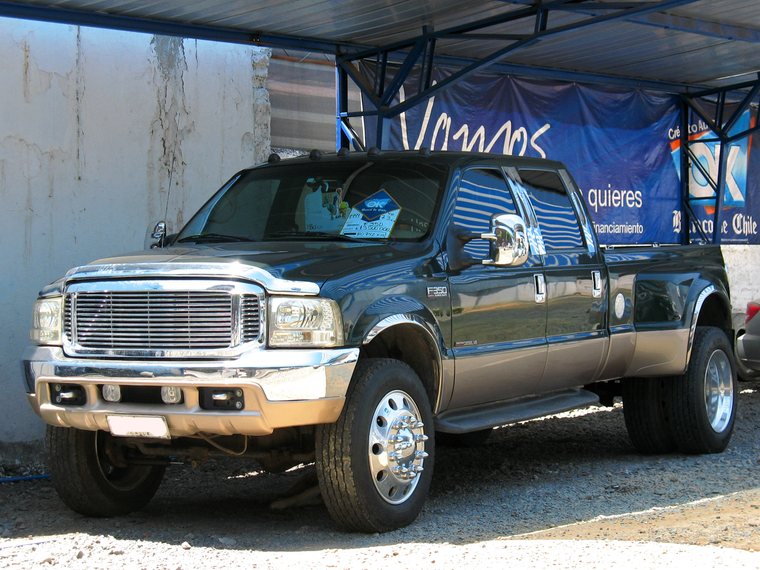
Photo: order_242, CC BY-SA 2.0, via Wikimedia Commons.
9. Audit modifications instead of accepting a parts list
Photograph the intake, exhaust, turbo area, gauges, wiring, fuel-system changes, suspension, wheels, hitch, and any programmer or switch. Ask who installed each modification, why it was installed, what calibration is currently loaded, and whether the factory parts are included.
A tuned truck is not automatically damaged, and a stock-looking truck is not automatically healthy. Modifications increase the number of questions. Look for unsupported wiring, rubbed hoses, excessive boost or exhaust-temperature claims, evidence of hard towing, and hardware that no longer matches the calibration.
Emissions requirements vary by original configuration and jurisdiction, but tampering with required emissions controls is not a reliability upgrade. The EPA states that defeat devices and emissions tampering are illegal. Resolve missing or altered equipment and calibration before treating the truck as road-ready.
10. Road-test the whole truck at operating temperature
Plan a route with city speeds, highway speed, safe acceleration, braking, turns, and a grade if available. The engine should start the test cold and finish fully warm.
Evaluate:
- throttle response and power under safe load;
- smoke, surging, hesitation, and warning lights;
- automatic shift timing, flare, harsh engagement, and converter behavior;
- manual clutch engagement, synchronizers, noise, and slip;
- steering play, wander, vibration, braking, and ABS operation;
- driveline clunk, U-joints, carrier bearings, transfer case, and axle noise;
- coolant and transmission temperature behavior when data is available.
Do not judge a transmission from the engine’s reputation. The truck may use an E4OD, 4R100, or a manual transmission depending on year and configuration, and the inspection and service history must match the installed unit.
11. Crawl underneath and inspect the chassis
The cleanest body panels cannot show frame condition, spring hangers, steering linkage, axle seals, brake lines, driveshafts, body mounts, bed supports, or rust hidden below. Use a lift or safe professional inspection setup; never crawl beneath an inadequately supported truck.
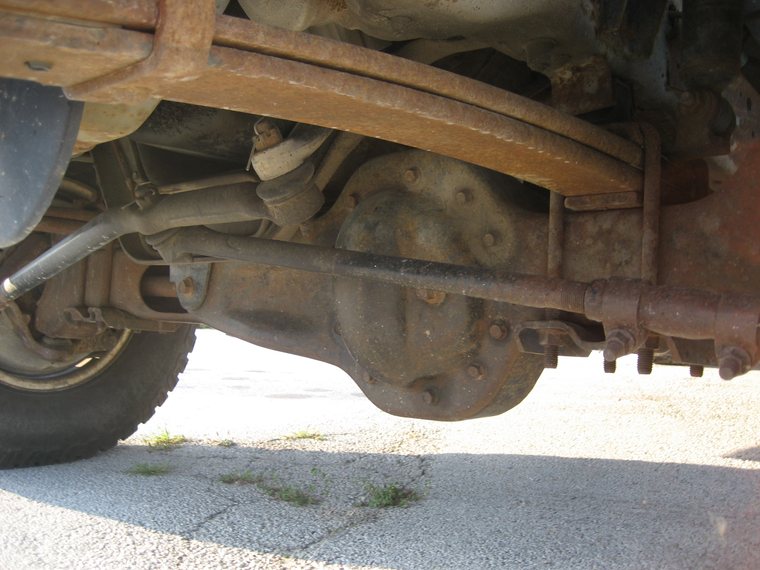
Photo: Dana60Cummins, public domain, via Wikimedia Commons.
Look for scaling corrosion, perforation, cracks, bent components, fresh coating over repairs, leaking hubs or differentials, uneven tire wear, loose steering, worn suspension, damaged brake or fuel lines, and hitch or frame work that suggests heavy use. A 7.3 engine can outlast several sets of chassis components; price the truck you are buying today, not the engine’s reputation.
12. Verify safety recall 07S57
Ford safety recall 07S57 addressed an intermittent camshaft position sensor on certain 1997–2003 vehicles equipped with a 7.3L engine. Ford’s owner letter says the condition could cause an engine stall and instructed dealers to inspect the sensor and replace it when necessary.
Use the NHTSA recall lookup, but also ask a Ford dealer to check the VIN in the manufacturer system and request prior completion paperwork. Do not assume that no current NHTSA result proves an older campaign was completed. Confirm the exact VIN.
13. Use a diesel specialist and a written condition
The best final step is an independent inspection by a technician who regularly works on 7.3L Power Stroke trucks. Ask for:
- cold-start observation;
- full module scan and saved results;
- appropriate injector and contribution testing;
- leak-source identification;
- charging, starting, and glow-plug system checks;
- cooling-system evaluation;
- road test at operating temperature;
- transmission and driveline assessment;
- lift inspection of chassis, steering, brakes, suspension, and rust;
- a written estimate for urgent and near-term work.
Make the purchase conditional on that inspection. If the seller will not allow a cold start, scan, road test, or independent lift inspection, the uncertainty belongs in the decision—not hidden by the 7.3 badge.
Red flags that should slow the deal down
- The engine is warm when a cold start was agreed.
- The seller uses starting fluid or recommends it.
- The VIN, title, labels, engine, and listing do not tell the same story.
- Codes or memory were recently cleared without a documented repair.
- Active oil at the rear of the engine is labeled “just the rear main” without tracing it.
- Coolant chemistry is unknown and multiple types appear mixed.
- The fuel-filter and water-separator history is missing.
- Tune, wiring, intake, exhaust, or towing modifications have no documentation.
- The transmission cannot be tested fully warm.
- Frame rust, steering wear, brakes, tires, or hitch condition are dismissed because “the 7.3 lasts forever.”
- The seller refuses an independent inspection.
Frequently asked questions
Is high mileage automatically a reason not to buy a 7.3 Power Stroke?
No single mileage number decides condition. Compare mileage with hours if available, records, cold-start behavior, scan results, oil and fuel system health, compression testing when justified, transmission condition, chassis corrosion, and evidence of towing or idling.
Which 7.3 Power Stroke year is best?
There is no universal best year. Applications and parts changed during production, and each truck now has a long individual history. Choose the configuration that fits your work, then verify the exact VIN, build information, condition, and records.
Does a little blow-by mean the engine is worn out?
Not by itself. A quick oil-cap observation is not a complete crankcase-pressure or engine-condition test. Use the correct diagnostic procedure when symptoms, oil consumption, starting, or performance justify it.
Can a clean scan prove the truck is healthy?
No. It is one part of the inspection. Codes can be cleared, and mechanical, chassis, transmission, or corrosion problems may not set a diagnostic fault. Combine scan data with a cold start, road test, records, and physical inspection.
Should I avoid every modified 7.3 truck?
No, but verify every change. Installer quality, calibration, gauges, towing use, service history, included factory parts, and current legal configuration matter more than the seller’s parts list.
Final buying rule
Buy the evidence, not the legend. A strong 7.3L Power Stroke candidate starts cold without being staged, has traceable records, passes a Ford-capable scan and warm road test, shows manageable leaks and corrosion, keeps its required equipment intact, and survives an independent diesel and chassis inspection. If those pieces do not agree, keep looking.
Related 7.3 guides
Use the 7.3 Power Stroke symptoms and reliability guide to turn a hard start, stall, leak, fuel issue, or turbo symptom into a diagnostic plan. Use the 7.3 Power Stroke maintenance guide to build a documented first-90-days service baseline after purchase.
Photo credit
Cover photo: “1997 Ford F-250 Heavy Duty SuperCab in White, front left” by Mr.choppers, CC BY-SA 3.0, via Wikimedia Commons.
Evidence
Sources
Primary references used to verify the regulatory and technical details in this article.
- 1. 7.3L Ford Remanufactured Diesel Engine Application ChartFord Motor Company
- 2. 2002 7.3L Power Stroke Diesel Owner’s Guide SupplementFord Motor Company
- 3. 1998 Ford Maintenance GuideFord Motor Company
- 4. Technical Service Bulletin 04-4-4: Engine Oil LeakFord Motor Company
- 5. Safety Recall 07S57 Owner NotificationFord Motor Company and NHTSA
- 6. Check for RecallsNational Highway Traffic Safety Administration
- 7. VIN DecoderNational Highway Traffic Safety Administration
- 8. Aftermarket Defeat Devices and Tampering Are IllegalUnited States Environmental Protection Agency
Inventory
Shop trucks from this story
Next steps