
7.3L Power Stroke Reliability: Common Problems and Symptoms
Learn how to interpret 7.3L Power Stroke hard starts, stalling, oil leaks, fuel issues, turbo symptoms, and model-year differences without replacing parts from a guess.
The 7.3L Power Stroke has a strong reputation, but reputation is not a diagnostic result. Ford used the engine across different chassis and production breaks from model years 1994–2003, and every surviving truck now has its own maintenance, modification, corrosion, towing, and repair history.
This guide explains documented service conditions and symptom patterns. “Common problems” is a search term, not a claim that every truck will develop every condition below. A Ford technical service bulletin confirms that technicians were given a procedure for a condition; it does not publish a failure rate. Diagnose the truck in front of you before buying parts.
Symptom-to-system quick reference
| Symptom | Systems worth checking | What should confirm the cause |
|---|---|---|
| Cold hard start | Batteries, cranking speed, glow-plug controls, oil level/grade, fuel supply, high-pressure oil system | Ford-capable scan data, electrical tests, fuel and oil-pressure diagnostics |
| Cranks but will not start | Fuel supply, oil level, high-pressure oil operation, camshaft position signal, electrical supply | Stored data, live cranking data, fuel checks, factory diagnostic path |
| Intermittent stall | Camshaft position sensor recall status, wiring, fuel and power supply | VIN campaign check, captured faults/data, circuit testing |
| Rough idle or misfire | Fuel quality, air in fuel, injector electrical/control, oil pressure, mechanical condition | Contribution and electrical tests; compression test only when justified |
| Oil at rear of engine | Valley source, high-pressure pump fittings, turbo pedestal, rear engine seals | Clean-and-trace inspection or dye; do not diagnose by location alone |
| Low power or smoke | Air restriction, charge-air leaks, fuel restriction/contamination, exhaust/turbo operation | Restriction gauge, scan data, pressure tests, visual inspection |
| Turbo noise | Exhaust leak, intake leak, normal/model-specific acoustic condition, turbo damage | Physical inspection and measured operation, not sound alone |
1. Camshaft position sensor recall and intermittent stalling
The strongest documented 7.3L issue in this list is a federal safety recall. Ford recall 07S57 covered certain 1997–2003 F-Super Duty, Excursion, and E-Series vehicles equipped with the 7.3L engine. Ford reported that the camshaft position sensor could function intermittently and potentially cause the engine to stall.
The owner notification instructed dealers to inspect the sensor and replace it with an improved part when necessary. That makes recall completion a VIN-specific fact, not a guess based on whether a previous owner says the sensor was changed.
Check the VIN through NHTSA and ask a Ford dealer to review manufacturer campaign history. Keep the completion record. Do not assume that an empty current NHTSA result proves an older recall was completed, and do not assume every stall is the camshaft position sensor. Capture scan data and test the affected circuits.
2. Cold hard starts and no-start complaints
Ford’s diesel supplement ties starting behavior to several systems. The glow-plug system is electronically controlled, the WAIT TO START light should illuminate at least briefly when the engine is cold, and oil viscosity matters because engine-oil pressure actuates the injectors.
A hard start can therefore involve:
- weak or mismatched batteries and slow cranking;
- starter, cable, ground, or charging problems;
- glow plugs, relay/control, sensors, or related wiring;
- low, unsuitable, or poorly maintained engine oil;
- high-pressure oil control or leakage;
- restricted, contaminated, aerated, or water-affected fuel;
- injector electrical or mechanical condition;
- compression or other internal mechanical condition.
That list is why replacing injectors from smoke color or a short video is unreliable. Start with a genuinely cold engine, preserve the symptom, scan it with Ford-capable equipment, and follow the correct diagnostic sequence.
Ford also warns against ether or other starting fluid in the intake. Because the glow-plug system can ignite it unpredictably, the guide describes a risk of immediate explosive engine damage and personal injury. A truck that “needs a little ether” is not displaying a normal workaround; it has an unresolved starting problem and an unsafe operating practice.
3. High-pressure oil leaks in the engine valley
The injection system’s use of high-pressure engine oil makes leak location especially important. Ford TSB 04-4-4 addresses oil leaks from high-pressure oil pump outlet fittings and an end plug on applicable 1999–2003 Super Duty vehicles with the 7.3L engine.
The bulletin explains a common diagnostic trap: oil can collect in the engine valley and drain down the back of the engine. From below, that can look like a rear-main-seal or oil-pan leak. The visible exit point is not necessarily the source.
A proper approach is to clean the area safely, inspect the valley and fittings, and trace active oil movement. Dye or other shop procedures may be appropriate. Do not authorize a major seal repair until the source is demonstrated.
The reverse is also true: do not dismiss an active leak because a cheaper valley source is possible. Confirm the repair, oil loss, contamination of nearby components, and whether earlier work damaged fittings or threads.
4. Turbo-pedestal seepage versus an active leak
Ford issued service guidance for oil leakage associated with the exhaust-backpressure actuator area in the turbo pedestal on applicable 1999–2003 Super Duty 7.3L trucks. The archived bulletin distinguishes light seepage that gathers dust from an active dripping leak.
That distinction matters. A dusty film is an inspection note; a fresh drip with measurable oil loss is a different condition. Clean and trace the area, inspect the valley and rear of the engine together, and verify the exact source before ordering a pedestal, turbo, or engine seal.
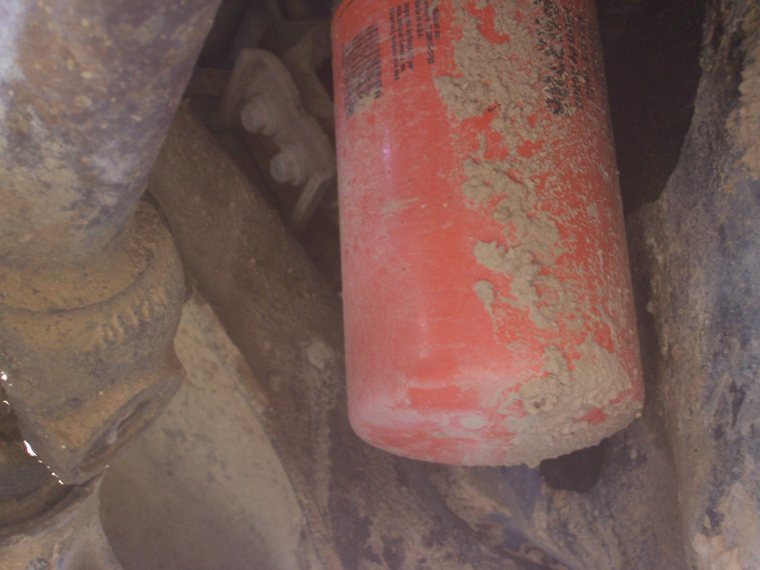
Photo: Jeremiah Bell, CC BY-SA 3.0, via Wikimedia Commons. The source identifies a Ford F-250 7.3L diesel but does not establish Power Stroke versus IDI, so the image is used only to illustrate an under-engine service area.
5. Fuel restriction, water, contamination, and air
The Ford guide describes a filter/water separator and warns that water left in the system can cause extensive injection-system damage. Its troubleshooting section also points to a clogged fuel filter, contaminated fuel, and air entering through loose connections as causes worth checking when the engine runs poorly.
Symptoms may include hard starting, rough running, smoke, or reduced performance, but those symptoms overlap with oil-pressure, air, electrical, and mechanical causes. Ask:
- When was the correct fuel filter installed?
- Was the water separator drained on schedule and after a warning?
- Has the truck run out of fuel?
- Are filter-bowl, line, pump, or fitting leaks visible?
- Did the symptom begin immediately after refueling or service?
- Does scan and pressure data support a fuel-delivery problem?
Do not add an aftermarket pump, regulator, or injector set merely because a forum post describes a similar symptom. Establish the actual restriction, pressure, contamination, or air-entry problem first.
6. Air restriction, charge-air leaks, and low power
Ford equipped these applications with an air-filter restriction gauge and tells owners to service the element when the indicator reaches its change mark. A filter can look dirty without being at the specified restriction, while a damaged housing, disconnected indicator, collapsed duct, loose boot, or dirt track can create a different problem.
When a truck feels weak, inspect the complete path:
- air-cleaner housing and restriction gauge;
- ducts, clamps, boots, and charge-air connections;
- turbo inlet and visible wheel condition when accessible safely;
- exhaust leaks and exhaust-backpressure hardware;
- fuel restriction and quality;
- relevant commanded and measured scan values.
Smoke color and turbo sound should narrow questions, not end the diagnosis. A howl does not automatically prove a failed turbo, and no smoke does not prove the air and fuel systems are healthy.
7. Model-year and production-break differences
“7.3 Power Stroke” does not describe one unchanged parts catalog. Ford’s application sheet lists model-year, chassis, emissions, and engine-serial-number breaks. Archived Ford service information also documents significant changes around 1998 Econoline and 1999 Super Duty applications, including fuel-delivery, injector, high-pressure oil line, reservoir, and turbo/pedestal details.
Treat 1999 as a year where build information matters. Confirm:
- VIN and certification label;
- build date;
- engine serial number when required;
- emissions label and chassis application;
- installed part number or engineering code for the component being serviced.
This is not evidence that every early or late version is better. It is evidence that “fits all 1999 7.3 trucks” may be an unsafe parts assumption.
The 2003 model year also deserves confirmation because both 7.3L and 6.0L Power Stroke applications can appear in the market. Verify the installed engine instead of relying on the listing title.
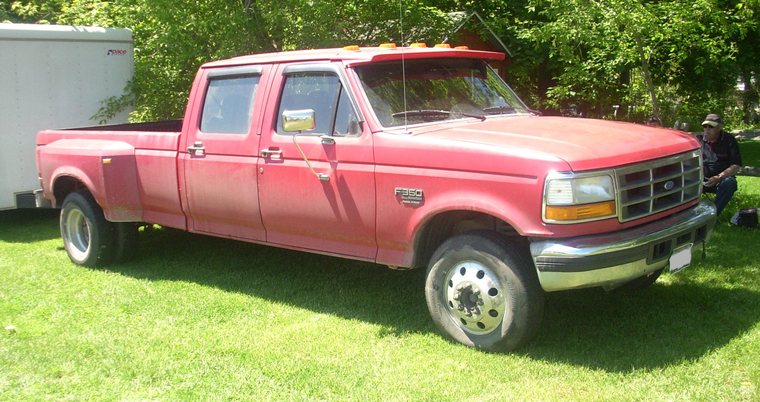
Photo: Bull-Doser, public domain, via Wikimedia Commons.
8. Oil-pan and underbody corrosion
Any truck used where road salt or other corrosive material is common deserves a lift inspection. Check the oil pan, frame, brake and fuel lines, spring mounts, body mounts, axle and steering components, and the underside of the cab and bed.
Surface rust, scaling, active wetness, and perforation are different conditions. Clean enough area to determine whether the pan is leaking, probe only with appropriate professional methods, and inspect the rest of the chassis. Do not declare imminent engine failure from one rusty photograph, but do not let the engine’s reputation distract from structural or brake-line corrosion.
9. Modifications can hide or create overlapping symptoms
Programmers, injectors, turbo changes, intake and exhaust work, fuel-system conversions, gauges, and transmission modifications can change the diagnostic baseline. Ask for installer invoices, calibration information, original parts, and the reason each change was made.
A modified truck is not automatically damaged. However, unexplained wiring, mismatched calibration and hardware, high exhaust-temperature history, repeated transmission work, or a seller who cannot identify the tune increases uncertainty. Return the truck to a known configuration when diagnosis requires it.
What a TSB can and cannot tell you
A Ford TSB can establish that:
- a condition was recognized in a defined application;
- Ford gave technicians a diagnostic or repair procedure;
- model years, build dates, part breaks, or symptoms may limit the scope.
It cannot establish:
- how many trucks failed;
- that every vehicle in the range will fail;
- that the bulletin’s part is the cause of your symptom;
- that the newest replacement part is correct for every serial-number break;
- that a truck outside the stated application has the same condition.
Use the bulletin to improve diagnosis, not to replace it.
Frequently asked questions
Is the 7.3 Power Stroke reliable?
It can be a durable engine when maintained and correctly diagnosed, but a family reputation cannot grade a specific 20-plus-year-old truck. Evaluate cold starting, scan data, oil and fuel systems, cooling, modifications, transmission, chassis, and records together.
What is the most serious documented 7.3 recall?
Recall 07S57 addressed an intermittent camshaft position sensor on certain 1997–2003 7.3L vehicles that could result in an engine stall. Check completion for the exact VIN.
Why is oil showing at the back of the engine?
Possible sources include oil that began in the engine valley and drained rearward, turbo-pedestal or high-pressure oil components, and engine seals. Clean and trace the leak before naming the repair.
Does rough idle mean the injectors are bad?
No. Fuel quality or aeration, oil-pressure control, electrical supply, injector control, compression, and other causes can overlap. Use contribution and electrical testing plus the factory diagnostic path.
Are all 1999 7.3 Power Stroke parts the same?
No. Ford documented production and component changes around this period. Verify build date, engine serial number, application, and part code.
Next steps
If you are shopping, use the companion 7.3 Power Stroke buyer’s checklist. To establish a service baseline, use the 7.3 Power Stroke maintenance guide. These are separate pages because purchase inspection, symptom diagnosis, and scheduled maintenance answer different questions.
Photo credit
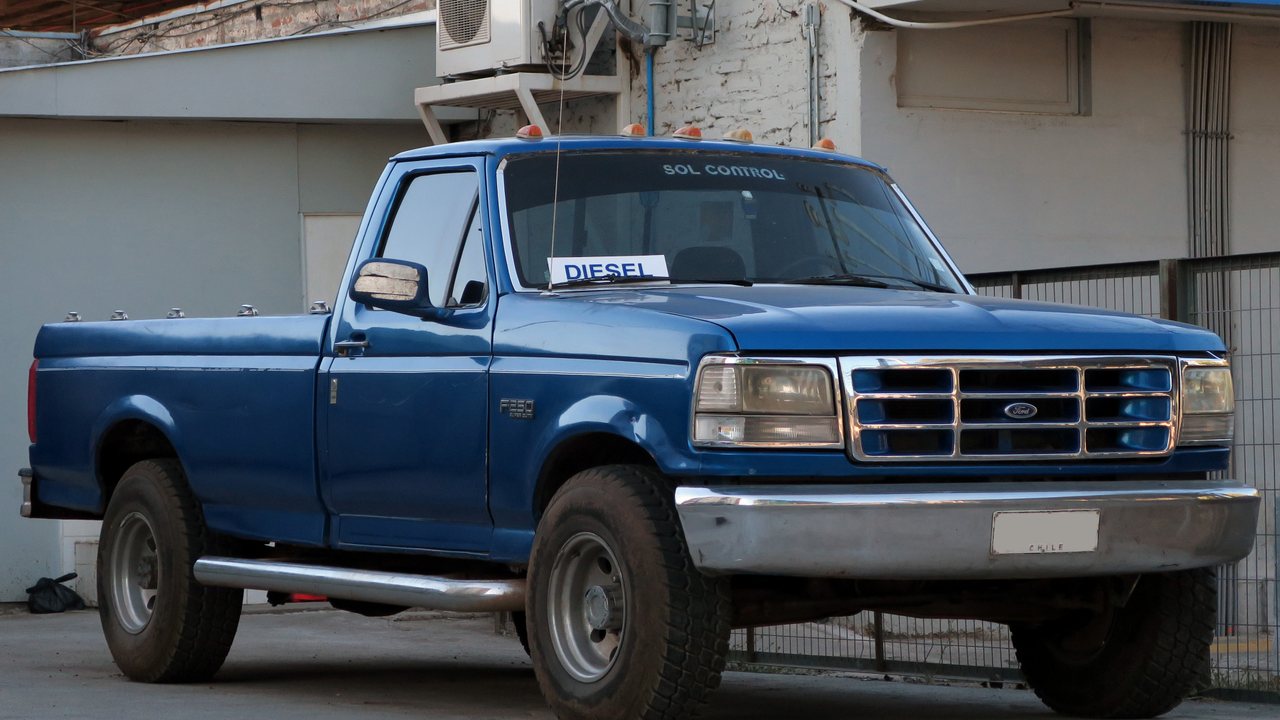
Cover photo: “Ford F-250 7.3d Super Duty 1996” by RL GNZLZ, CC BY-SA 2.0, via Wikimedia Commons.
Evidence
Sources
Primary references used to verify the regulatory and technical details in this article.
- 1. 7.3L Ford Remanufactured Diesel Engine Application ChartFord Motor Company
- 2. 2002 7.3L Power Stroke Diesel Owner’s Guide SupplementFord Motor Company
- 3. Safety Recall 07S57 Defect Information ReportFord Motor Company and NHTSA
- 4. Safety Recall 07S57 Owner NotificationFord Motor Company and NHTSA
- 5. Technical Service Bulletin 04-4-4: Engine Oil LeakFord Motor Company
- 6. Technical Service Bulletin 04-20-2: Turbo Pedestal Oil Leak (archived copy)Ford Motor Company, archived by Operation CHARM
- 7. Technical Service Bulletin 03-21-29: 7.3L Engine Parts Changes (archive)Ford Motor Company
- 8. Check for RecallsNational Highway Traffic Safety Administration
Inventory
Shop trucks from this story

Next steps