
LBZ Duramax Buyer’s Guide: What to Check Before You Buy
A strong LBZ reputation does not replace inspection. Verify the engine code, cold start, Allison behavior, rust, tuning history, repairs, and records.
An LBZ-powered Chevrolet or GMC can be an appealing used-truck choice, but the engine code should never replace a real inspection. Age, towing history, corrosion, calibration changes, and repair quality now vary more from truck to truck than the badge suggests. Start by confirming exactly what you are looking at, then judge the complete vehicle—not only the engine.
You can compare current Chevrolet diesel inventory and GMC diesel inventory, but verify the RPO code, VIN information, and equipment on the individual listing before treating any truck as an LBZ.
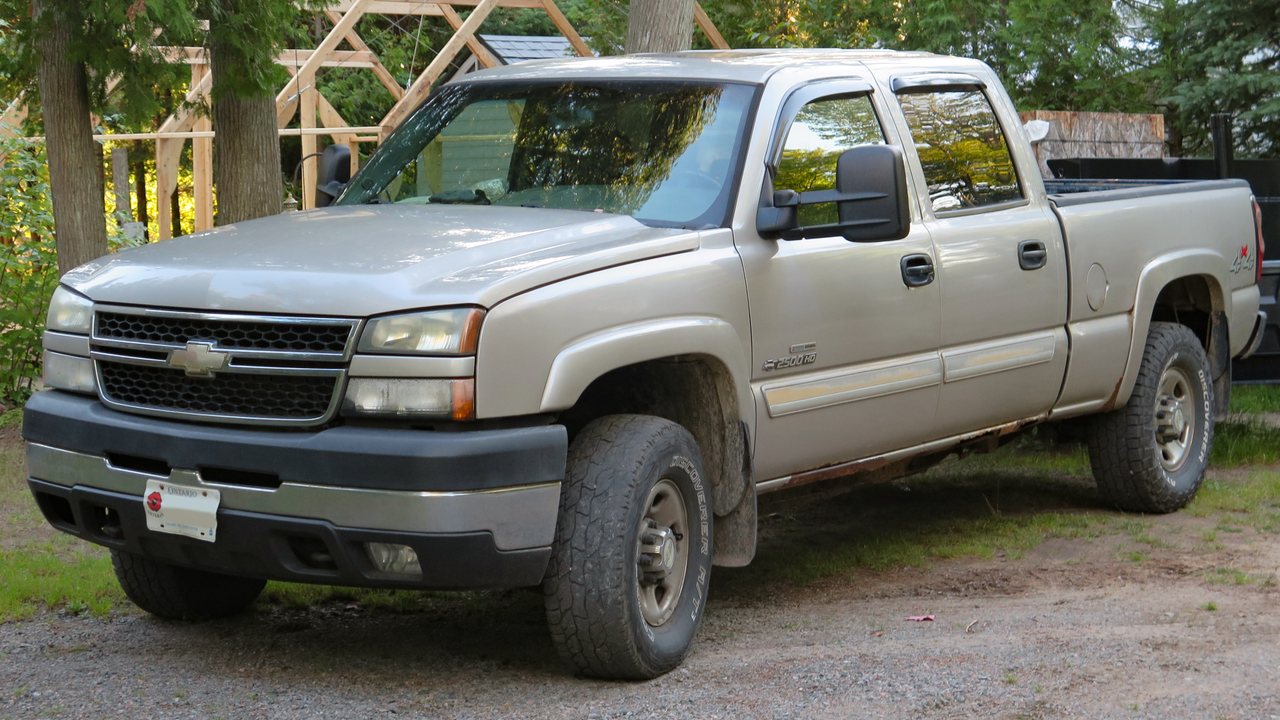
Cover photo: a 2006 Chevrolet Silverado 2500HD LS Crew Cab Short Bed LBZ 4WD, by Elise240SX, licensed under CC BY-SA 4.0.
Confirm the truck before evaluating the deal
Do not rely on a seller’s title alone. Confirm the VIN, model year, RPO label, drivetrain, axle configuration, transmission, and emissions equipment. Compare those details with the title and service records. A swapped engine, replacement transmission, or missing label does not automatically make a truck bad, but it creates more questions and makes documentation more important.
Before visiting, ask the seller not to warm the engine. Also request clear photos of the underbody, engine bay, door certification label, RPO label, hitch area, and any modifications. Run the VIN through the appropriate recall lookup and arrange an inspection with a diesel technician who knows GM heavy-duty trucks.
Use a cold start as the baseline
A true cold start reveals more than a polished walk-around. Confirm that the engine is actually cold, then observe how quickly it starts, how evenly it settles into idle, and whether unusual smoke, warning lights, fuel odor, or mechanical noise persists. A brief symptom can have several causes, so avoid diagnosing from a video alone.
Have the technician scan all modules, not only the engine controller. Stored, pending, and recently cleared codes can add context. Live data, cylinder contribution information, fuel-system behavior, and commanded versus actual values should be interpreted together with the physical inspection. One isolated reading is not a verdict.
Inspect fluids, cooling, and leaks
Look at engine oil, coolant, transmission fluid, power-steering fluid, and brake fluid for level, condition, cross-contamination, or an unexplained fresh change. A recently cleaned engine bay deserves the same attention as a dirty one: inspect from above and below after the road test, when leaks may be easier to see.
Check hoses, radiator connections, the coolant reservoir, charge-air plumbing, turbo area, and wiring repairs. Ask whether the truck has overheated, lost coolant, received injectors, or had fuel-system work. Receipts should identify the parts, installer, mileage, and reason for repair. “Just serviced” is useful only when the seller can explain what was done.
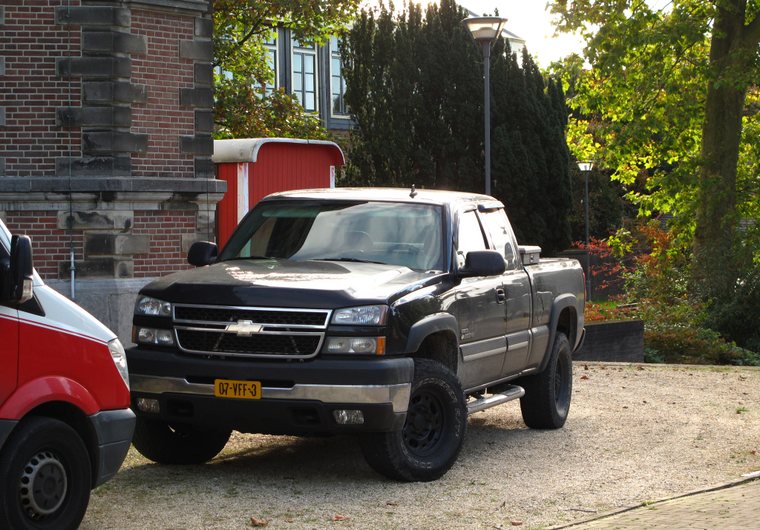
A 2006 Chevrolet Silverado 2500 with a 6.6-liter V8 diesel. Photo by Rutger van der Maar, licensed under CC BY 2.0.
Road-test the Allison and the complete driveline
Test the truck from cold through normal operating temperature. The transmission should engage consistently and shift predictably during light and moderate acceleration. Try reverse, low-speed maneuvering, highway cruising, and safe deceleration. Watch for warning messages, delayed engagement, harsh or inconsistent shifts, vibration, or behavior that changes when warm.
If equipped with four-wheel drive, verify operation in the appropriate safe setting and inspect the transfer case, front differential, driveshafts, universal joints, and axle seals. Tire size and wear should be consistent. Mismatched tires or neglected steering components can create expensive symptoms that are easy to blame on the engine.
Check the chassis for the work it has done
Inspect frame rails, crossmembers, brake and fuel lines, cab and bed mounts, suspension attachment points, steering components, brakes, wheel bearings, hitch hardware, and the spare-tire area. Surface oxidation is different from scaling, swelling, perforation, or previous structural repair.
Look for evidence of fifth-wheel or gooseneck use, trailer wiring repairs, overloaded springs, uneven tire wear, and heat damage around brakes or hubs. A truck used for towing is not automatically a poor buy, but the service history and condition should match that work. Our guide to matching a diesel truck to real towing work explains why the door label and actual configuration matter more than a model badge.
Treat modifications as questions, not proof
Document the tune, intake, exhaust, lift, wheels, tire size, gauges, fuel-system changes, and emissions equipment. Ask who installed each part, which calibration is currently loaded, and whether the original hardware is included. Poor wiring, unsupported claims, or missing emissions components increase uncertainty.
LBZ pre-purchase checklist
- Confirm VIN, RPO code, title, mileage, and equipment.
- See a genuine cold start and complete module scan.
- Inspect fuel, cooling, oil, turbo, and charge-air systems.
- Road-test the Allison cold and fully warm.
- Test four-wheel drive and inspect the transfer case if equipped.
- Examine frame, steering, brakes, tires, hitch, and underbody.
- Verify modifications and emissions configuration.
- Match major repair claims to itemized receipts.
- Price any unresolved issue before negotiating.
The best LBZ is not necessarily the lowest-mileage or most modified example. A documented truck that starts cleanly, scans consistently, drives correctly, and survives an independent inspection is usually a stronger candidate than one selling mainly on reputation. The same records-first approach applies when evaluating high-mileage diesel trucks.
Evidence
Sources
Primary references used to verify the regulatory and technical details in this article.
- 1. New Duramax 6.6L Diesel Engine (RPO LBZ) InformationGeneral Motors / NHTSA
- 2. Oil Consumption Guidelines for Duramax Diesel EnginesGeneral Motors / NHTSA
Inventory
Shop trucks from this story
Next steps