
Deleted Diesel Trucks: Legal, Reliability, and Resale Risks
A deleted diesel can create federal emissions, registration, diagnostic, restoration, and resale risks. Verify the hardware and calibration before buying.
A “deleted” diesel truck usually has some combination of emissions hardware removed, bypassed, or disabled and software changed to prevent the original system from operating as designed. Sellers may describe that work as a reliability upgrade, but a buyer inherits the complete legal, diagnostic, mechanical, and resale situation—not just the seller’s explanation.
For a truck intended for public-road use in the United States, treat an emissions delete as a major due-diligence issue. Do not assume that a missing warning light means the truck is compliant or healthy.
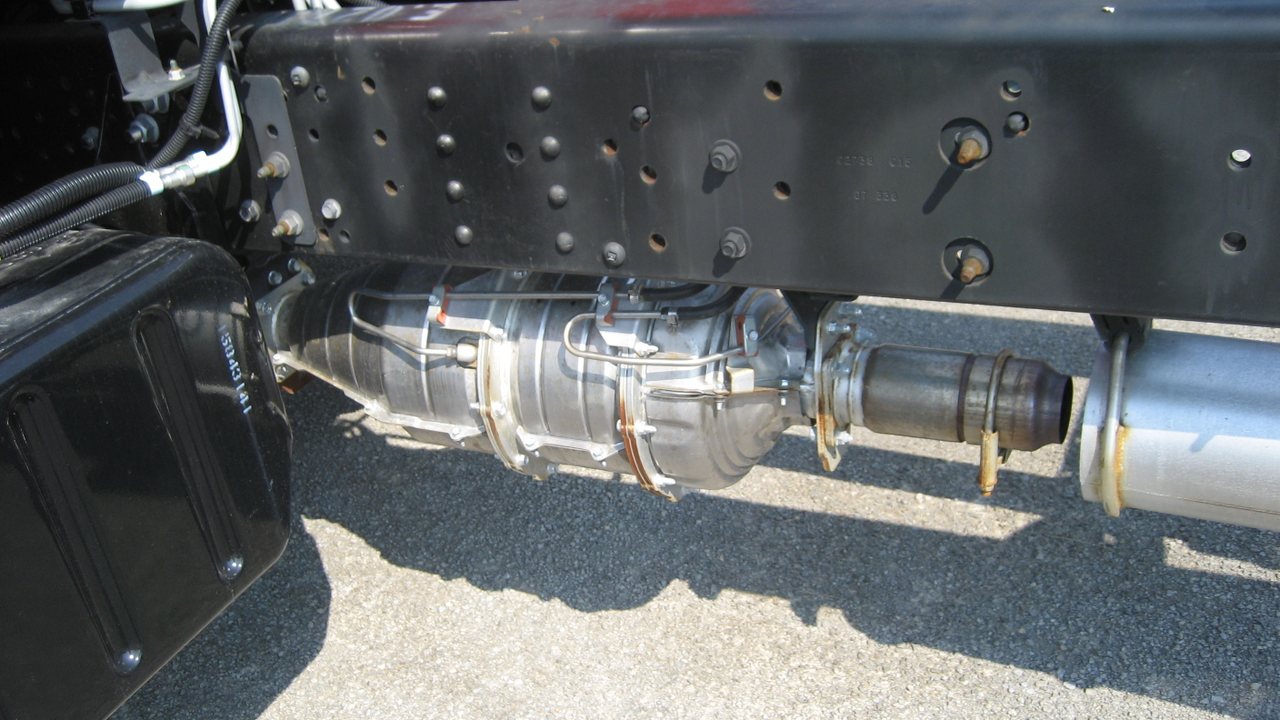
Cover photo: a real cordierite diesel particulate filter on a 2008 GM C7500 with a 7.8-liter Isuzu diesel, by Dana60Cummins, released into the public domain.
Understand what “deleted” can include
The word can refer to different changes: exhaust components removed or hollowed, EGR parts blocked, DEF/SCR hardware bypassed, sensors disconnected, or engine-control software altered. Some trucks retain parts that no longer function; others have visible replacement pipework. A seller may not know exactly what an earlier owner changed.
Ask for an itemized parts list, calibration information, installer invoice, original components, and any records from before and after the work. A handheld tuner in the glovebox is not complete documentation. Neither is a claim that the truck “passes everywhere.” State inspection and registration requirements vary, and ownership may cross state lines.
If your goal is an older factory configuration rather than modified emissions equipment, read our guide to pre-emissions diesel trucks and their real tradeoffs.
Federal rules are the starting point
Federal Clean Air Act rules prohibit tampering with required emissions controls and the manufacture, sale, or installation of defeat devices for motor vehicles. This article is buyer guidance, not legal advice, and local requirements can add another layer. Verify the truck’s situation with the relevant motor-vehicle or emissions authority and a qualified professional before purchase.
Do not assume that an out-of-state title, lack of a local test, or off-road use claimed by a seller resolves the issue. Your planned registration, use, financing, trade-in, and future sale are what matter.
Inspect hardware and software together
A visual check is necessary but not sufficient. Start with the underhood emissions label and identify the equipment the truck was certified to use. A diesel technician familiar with that platform should inspect the exhaust, EGR system, DPF, SCR/DEF equipment where applicable, sensors, wiring, and signs of cut or welded components.
Then scan every module with suitable equipment. Review stored, pending, and permanent diagnostic information where available, monitor status, calibration identification, warning history, and live data. Software can suppress a dashboard warning while the underlying hardware is absent or faulty. Recently cleared codes or incomplete monitors require explanation, not guesswork.
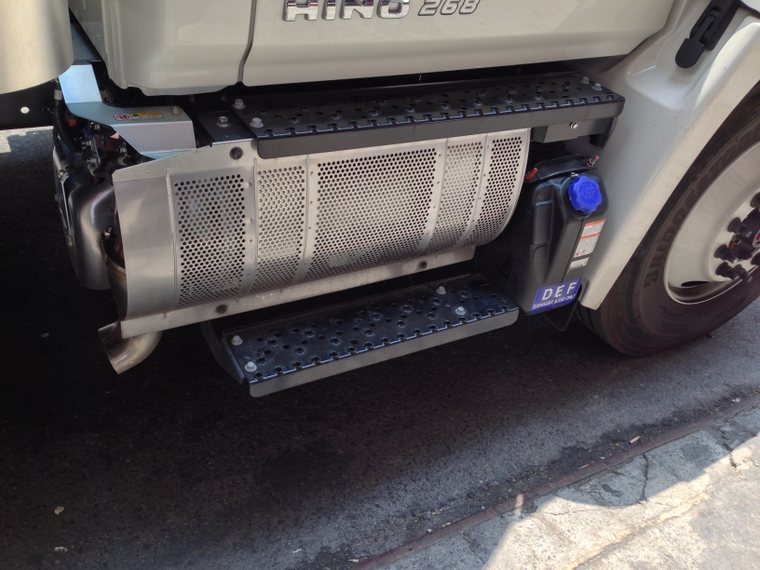
A Hino combined DPR/DPF, SCR, and DEF emissions module, illustrating the multiple systems that can be involved. Photo by Z22, licensed under CC BY-SA 3.0.
A delete does not prove mechanical health
Removing or disabling emissions controls does not establish that the engine, turbo, fuel system, cooling system, or transmission is healthy. It may also make diagnosis harder when software masks faults or the current calibration is unknown.
Request a genuine cold start and a full-temperature road test. Observe warning lights, smoke, odors, noise, fluid behavior, shift quality, and temperature behavior. Excessive visible smoke should not be presented as proof of power or a correct tune. Have the shop inspect wiring, exhaust routing, heat shielding, leaks, clamps, and nearby hoses or harnesses.
Document other changes at the same time: intake, turbo, injectors, fuel system, transmission tuning, lift, tires, and gauges. Increased power claims without parts, calibration, and service records add uncertainty.
Price restoration before negotiating
Returning a truck to its certified configuration can involve more than reinstalling one exhaust component. Missing sensors, wiring, tanks, lines, brackets, control modules, software, and damaged mounting points may all matter. Used parts may not be suitable, and the correct parts can depend on the exact VIN and emissions family.
Obtain a written inspection and restoration estimate from a qualified shop before making an offer. The estimate should identify what is missing, what can be verified, what remains unknown, and what must be tested after installation. Do not base the purchase on a generic online parts price.
This is especially important with an apparently inexpensive truck. Our guide to diesel trucks under $30,000 explains why unresolved systems can quickly erase the initial discount.
Deleted-diesel buyer checklist
- Photograph the VIN and factory emissions label.
- Ask exactly which hardware and software were changed.
- Require invoices, calibration information, and original parts if available.
- Inspect DPF, SCR/DEF, EGR, sensors, exhaust, wiring, and heat shielding.
- Perform a complete module scan with a platform-qualified technician.
- Verify rules for your intended registration and use.
- Obtain a written restoration estimate before negotiating.
- Check whether a dealer, lender, warranty provider, or future buyer will accept the truck.
- Walk away if the seller refuses an independent inspection or dismisses compliance questions.
The safest marketplace path is to shop current diesel inventory and verify that each candidate retains the required equipment for its certified configuration. A deleted truck is not automatically understood because it runs well during a short test drive. Buy only after the hardware, calibration, legal use, and restoration exposure are documented clearly enough for your actual ownership plan.
Evidence
Sources
Primary references used to verify the regulatory and technical details in this article.
- 1. Aftermarket Defeat Devices and Tampering — Enforcement AlertU.S. Environmental Protection Agency
- 2. Stopping Aftermarket Defeat Devices for Vehicles and EnginesU.S. Environmental Protection Agency
Inventory
Shop trucks from this story
Next steps