
Rust vs Mileage on a Used Diesel Truck: What Buyers Should Check
Low mileage cannot make up for structural corrosion. Learn where to inspect a diesel truck’s frame, mounts, lines, suspension, and previous repairs.
Mileage is easy to compare because it appears in every listing. Rust is harder: it can hide behind undercoating, collect inside boxed sections, or look harmless until a lift inspection reveals weakened metal and damaged lines. That is why a lower-mileage truck from a corrosive environment can be a worse purchase than a higher-mileage truck with a clean, documented chassis.
Rust should not be treated as one condition. Light surface oxidation, heavy scaling, perforation, seized hardware, structural damage, and a poor earlier repair carry very different consequences. The goal is to identify which one you are seeing before negotiating.
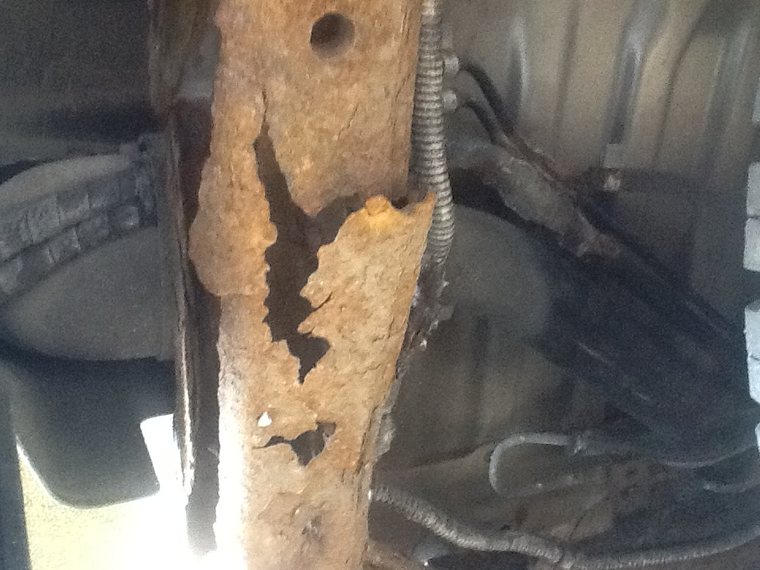
Severe frame corrosion and perforation on a Honda Passport/Isuzu Rodeo, shown as an example of structural rust rather than a diesel pickup. Photo by Run gmc, licensed under CC BY-SA 3.0.
Separate cosmetic rust from structural rust
Cosmetic rust may affect a bumper, exposed fastener, stone chip, or removable body panel without weakening a load-bearing part. Structural rust affects the parts that carry the cab, bed, suspension, steering, drivetrain, hitch, or crash loads. Scaling that sheds layers, swollen seams, holes, cracks near corrosion, and heavily thinned mounting points deserve professional evaluation.
Do not stab, hammer, grind, or scrape a seller’s truck without permission. Use good lighting, photographs, and a qualified inspector. A lift inspection is far more useful than looking under a truck parked on gravel.
The same records-first approach appears in our 7.3L Power Stroke buyer’s guide: age, repairs, and chassis condition can matter as much as the engine family.
Inspect the frame from front to rear
Follow both frame rails instead of checking only the easiest visible section. Pay particular attention to:
- steering gear and front suspension attachment areas;
- engine and transmission crossmembers;
- cab and bed mounts;
- spring hangers, shackles, control-arm mounts, and shock mounts;
- crossmembers around the fuel tank and spare tire;
- receiver hitch and gooseneck or fifth-wheel mounting points;
- seams, drain points, and areas hidden by shields or brackets;
- locations with fresh undercoating, welding, plates, or mismatched paint.
A repair is not automatically unsafe, but it should be identifiable and documented. Ask who performed it, what metal was removed, what was added, and whether alignment was checked. Cosmetic coating over active scaling is not the same as a properly prepared repair.
Check lines, hardware, and systems attached to the frame
The frame is only part of the rust inspection. Examine brake lines, fuel lines, transmission cooler lines, parking-brake cables, wiring supports, tank straps, exhaust hangers, fasteners, and grounding points. A truck may still look straight while fragile lines and seized hardware turn normal maintenance into a larger job.
Inspect the cooling stack, radiator supports, battery trays, body mounts, rocker panels, cab corners, floor, wheel arches, bed supports, tailgate, and lower door seams. On work trucks, toolboxes, service bodies, salt spreaders, plows, and bed liners can trap moisture or hide mounting damage.
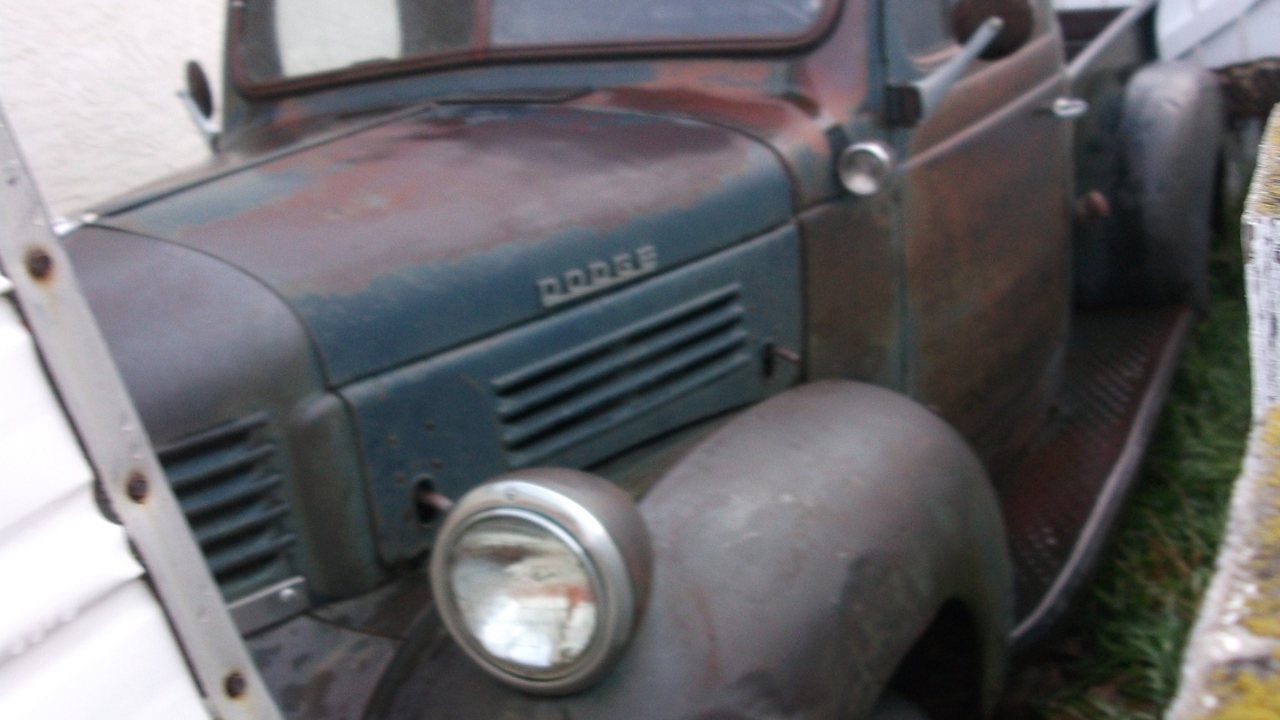
Cover photo: a rust-covered vintage Dodge WC pickup illustrating visible body corrosion, by dave_7, licensed under CC BY 2.0.
Use the road test to look for related symptoms
Rust does not diagnose alignment or suspension condition by itself, but severe corrosion and earlier repairs can exist alongside drivability problems. During a safe road test, note steering centering, pulling, vibration, brake feel, unusual movement, and noises over uneven surfaces. Inspect tire wear and compare wheel position from side to side.
After the drive, check for fluid leaks and look again at brake and fuel lines. If the truck tows, have the hitch and its frame attachment evaluated. A clean-looking receiver does not prove that the surrounding frame is sound.
Investigate geography and previous use
Ask where the truck lived and worked, not only where it is being sold. Vehicle history, inspection stickers, service invoices, fleet markings, and old listing photos can help establish that history. Snow and road-treatment exposure matter, but coastal air, muddy worksites, farm chemicals, standing water, and poor drainage can also contribute.
An underbody wash and protective treatment may be good maintenance. They are not proof of hidden damage. When a fresh black coating covers every line, bolt, and rubber component, ask to see earlier photographs and schedule a more careful inspection.
Rust inspection checklist
- Inspect on a lift with bright light.
- Photograph both frame rails and every mount or crossmember.
- Distinguish surface oxidation, scaling, perforation, and repaired areas.
- Check brake, fuel, cooler, and hydraulic lines where present.
- Inspect cab, bed, rocker, floor, wheel-arch, and body-mount corrosion.
- Examine hitch and in-bed towing-hardware attachment points.
- Review geography, work history, and prior underbody photos.
- Price seized fasteners and collateral repairs, not only visible metalwork.
- Obtain a body/frame specialist’s opinion when structure is uncertain.
Rust can change the economics of an otherwise attractive truck. This is especially important when shopping diesel trucks under $30,000, where a low purchase price can hide labor-intensive chassis work. For specialized bodies and mounted equipment, use the more detailed checks in our used mechanics truck buying guide.
Do not let a clean interior, low odometer reading, or strong cold start end the inspection early. Mileage helps estimate use; the frame and attached systems help determine whether the truck can safely keep doing the job.
Evidence
Sources
Primary references used to verify the regulatory and technical details in this article.
- 1. 49 CFR § 393.201 — FramesFMCSA / Electronic Code of Federal Regulations
- 2. Tacoma Frame Inspection for Rust PerforationToyota Motor Sales / NHTSA
Inventory
Shop trucks from this story
Next steps